

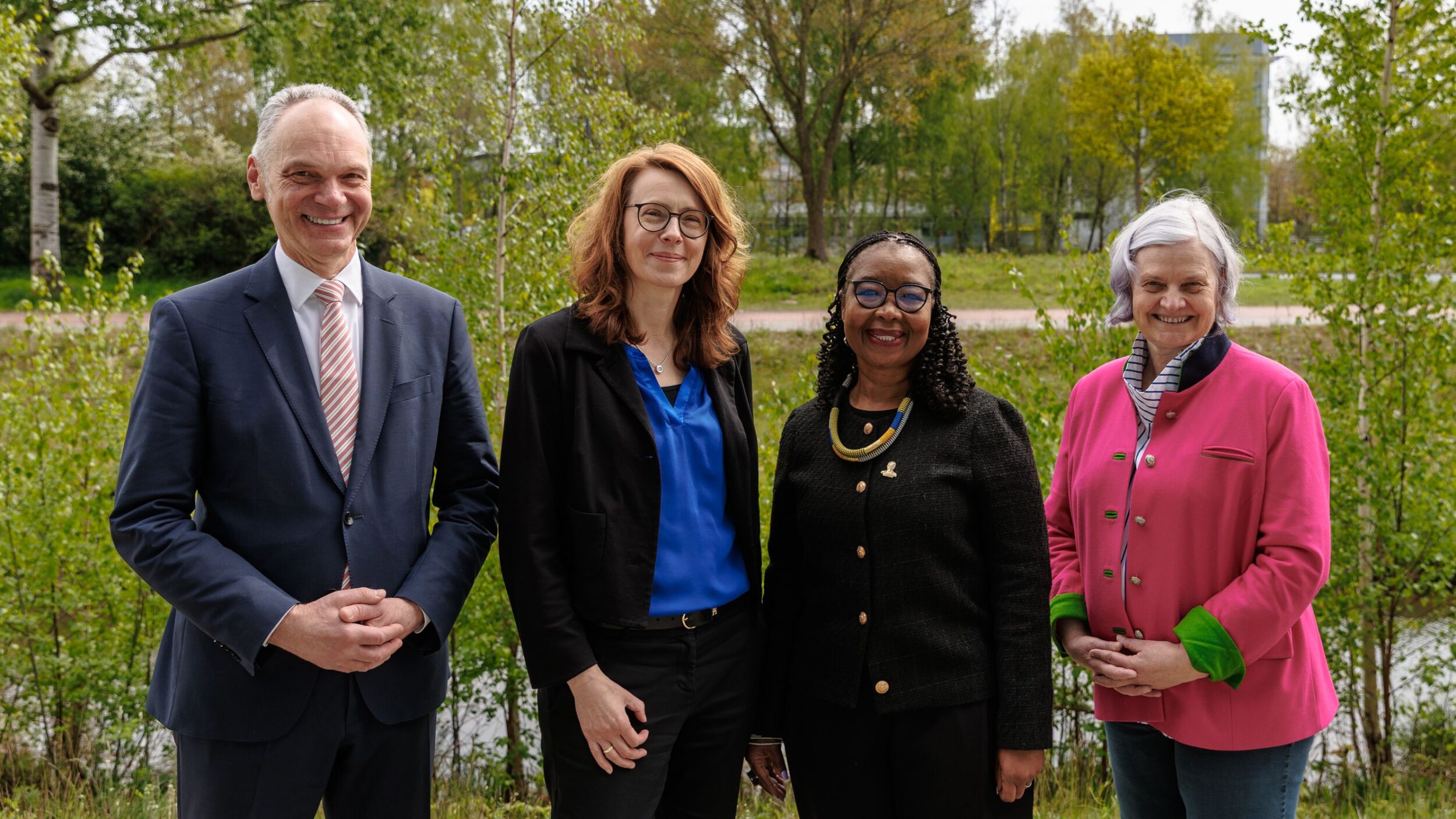

The Universities of Oldenburg and Bremen maintain close ties with numerous academic institutions worldwide. A key partner in this network is the Nelson Mandela University in South Africa.
The main areas of collaboration between the University of Oldenburg and Nelson Mandela University are marine sciences, climate and sustainability, education and lifelong learning, the humanities and social sciences, medicine and health sciences, and renewable energies.
The two universities, one located in northwest Germany near the North Sea and the other in the port city of Gqeberha by the Indian Ocean, have been collaborating since 1998. Over the years they have developed a close, trust-based partnership which has now been further intensified: Nelson Mandela University is actively involved in the “Northwest Alliance”, the joint proposal of the Universities of Oldenburg and Bremen in the Excellence Strategy competitive funding programme, and is also a partner in the Ocean Floor Cluster of Excellence.
“Our relationship with the University of Oldenburg goes back more than a quarter of a century and has developed into an active institutional partnership based on trust and shared goals. We are delighted to extend this partnership to the University of Bremen, which shares many of our strengths and values,” said Professor Dr Sibongile Muthwa, Vice-Chancellor of Nelson Mandela University. Professor Muthwa represented her university in Bremen last week, when a panel of experts from the German Council of Science and Humanities visited the campus there to review the Northwest Alliance’s proposal.
Building partnerships with institutions in the Global South
“The Northwest Alliance and Nelson Mandela University are a perfect match. We assume responsibility and stand for an open society and tolerance. Together, we are helping to shape a more sustainable future,” said Professor Dr Ralph Bruder, President of the University of Oldenburg. “The Northwest Alliance specifically aims to build partnerships with institutions in the Global South – and Nelson Mandela University plays a key role in this endeavour,” he added.
Professor Dr Jutta Günther, President of the University of Bremen said: “We were delighted to welcome Vice-Chancellor Sibongile Muthwa to Bremen. For us, Nelson Mandela University is a shining example of a university where collaboration with a wide range of societal stakeholders is a matter of course. Our exchange with Sibongile Muthwa was characterised by mutual respect and enthusiasm as well as the close ties between northwest Germany and South Africa. We see this partnership as a wonderful opportunity to learn from one another, far beyond the existing collaboration within the Ocean Floor Cluster of Excellence. As the Northwest Alliance and as the University of Bremen, we look forward to strategically expanding and intensifying our collaboration with Nelson Mandela University.”
The strategic partnership between the Northwest Alliance and Nelson Mandela University aims to strengthen perspectives from the Global South in socially relevant fields of research. To this end, the partnership seeks to expand collaboration in research, teaching and knowledge transfer, as well as in joint research, funding initiatives and academic mobility.
About Nelson Mandela University
Established on 1 January 2005 under the name Nelson Mandela Metropolitan University, the university emerged from three predecessor institutions whose history dates back to 1882. The University of Oldenburg had collaborated with one of these institutions, the University of Port Elizabeth, since 1998, initially with a focus on educational sciences.
In 2017 it was officially renamed to Nelson Mandela University: the only university in the world to bear the name of the South African freedom fighter, Nobel Peace Prize laureate and statesman.
Nelson Mandela University has seven campuses, six of which are located in Gqeberha (formerly Port Elizabeth), the largest city in Eastern Cape province. More than 33,000 students were enrolled at the university in 2025. Its seven faculties offer more than 500 study programmes.
Editor: Constanze Böttcher (redaktion@uol.de)