
The Northwest Alliance strengthens the relationship between academia, businesses, and society. The alliance supports start-ups, fosters strategic partnerships, and encourages interdisciplinary collaboration to transform research findings into innovations and develop joint solutions to societal challenges.
Founding and Innovation
The Northwest Alliance systematically highlights the innovation potential of the universities of Bremen and Oldenburg and translates it into practical applications. Research findings are not only published in scientific journals, but also developed further into technical and social innovations in collaboration with partners from the fields of business, politics, administration, and civil society. Researchers receive comprehensive support throughout this process, from developing an initial idea to identifying suitable partners and implementing application-oriented projects.
Start-up services such as BRIDGE or the Start-Up and Innovation Center at the University of Oldenburg contribute significantly to creating a vibrant start-up climate for students, researchers, and alumni. Promising research- and knowledge-based ideas are identified early on, developed systematically, and guided toward becoming marketable or socially impactful solutions. The focus is on individual guidance, training opportunities, networking, and support with funding applications.
Strategic instruments such as scouting, promoting social innovation, open innovation formats, and active participation management also contribute significantly. Targeted networking of relevant stakeholders and promotion of interdisciplinary collaboration result in sustainable solutions with concrete added value for society and the economy.
Start-Up Support
hoi startup factory
Nearly 40 participating private companies, universities in the Northwest, and local and regional public institutions form the hoi startup factory, which was founded in 2025. It combines academic innovation with entrepreneurial spirit and has, for example, supported the development of a joint intellectual property strategy for academic institutions. The aim of the alliance is to professionalize the start-up process, transform research into added value, and establish a cross-border ecosystem for innovation and growth. In addition to the universities of Oldenburg and Bremen, the participating universities include Bremen City University of Applied Sciences, Constructor University, Jade University of Applied Sciences, Bremerhaven University of Applied Sciences, University of the Arts Bremen, the University of Vechta, and Emden/Leer University of Applied Sciences.
BRIDGE
BRIDGE is the central point of contact for students, alumni, and university staff in Bremen on all matters relating to starting a business. The university network is supported by the University of Bremen, Bremen City University of Applied Sciences, Bremerhaven University of Applied Sciences, the University of the Arts Bremen, Constructor University, and Bremer Aufbau-Bank GmbH. BRIDGE’s goal is to strengthen the start-up climate at the participating universities and to support promising ideas at an early stage. To this end, BRIDGE offers support in all phases of starting a business – with practical events, individual counseling, and the CAMPUSiDEEN competition.
Founding and Innovation Center
Since its establishment in 2012, the Founding and Innovation Center (GIZ) at the University of Oldenburg has supported more than 600 start-up projects, from which 148 new companies have been launched – many of them winning prestigious awards. It is the central point of contact for students, alumni, and members of the University of Oldenburg on the subject of start-ups. In addition to professional counseling, training, and mentoring, the center also offers funding. University start-up projects can receive small grants provided by the university in cooperation with the city of Oldenburg. In addition, the EXIST-Women funding line offers a program that supports women’s entrepreneurship.
Technology Transfer
Center for Wind Energy Research – ForWind
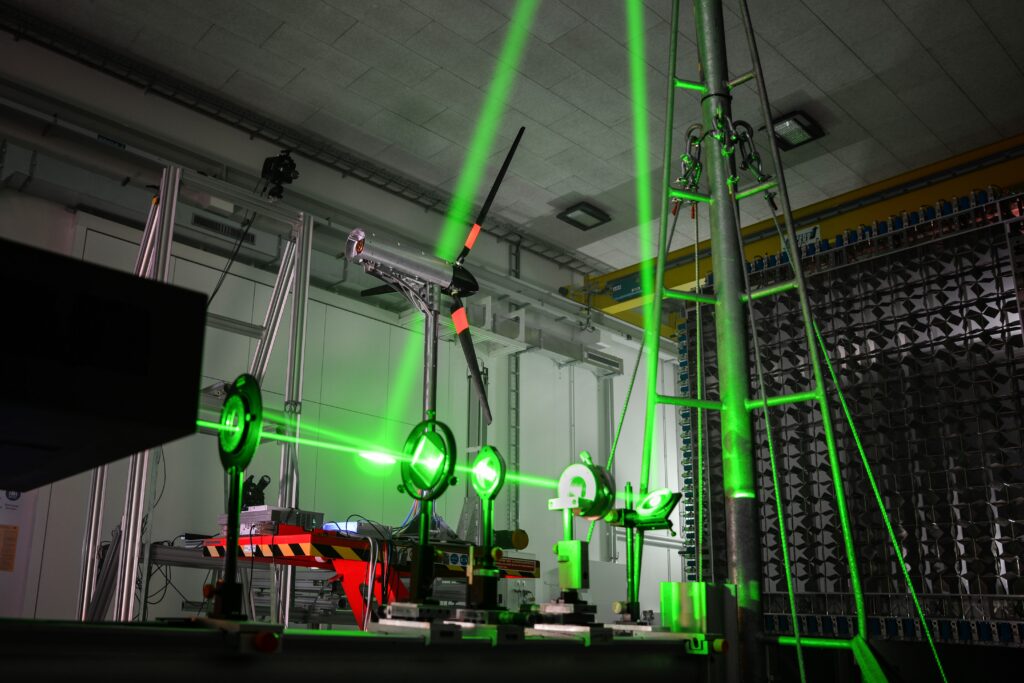
ForWind is the joint center for wind energy research at the universities of Oldenburg, Bremen, and Hannover. It brings together a wide range of disciplines, including engineering, materials science, physics, meteorology, computer science, and economics. Established in 2004, the center brings together university research on wind energy and promotes knowledge transfer between science, industry, and politics. The University of Bremen became a member of ForWind in 2009. Almost 300 people from around 30 research groups currently work in this center.
Their research addresses key challenges in wind energy, including the accurate measurement of turbulence in the wake of wind turbines, the assessment of structural loads on offshore wind turbine support systems, and the role of wind power in enabling a sustainable, decentralized energy supply.
Relationship Management
As a key player in the science and innovation system, the Northwest Alliance sees itself as a catalyst for social transformation. The alliance actively networks research and teaching with urban society, companies, foundations, civil society initiatives, and political decision-makers at the municipal, state, and federal levels.
This fosters continuous interaction between science and practical application, transcending individual projects and fortifying long-term partnerships within the region. Equal-footing cooperative formats create spaces in which scientific expertise and social experience interact productively. Together, solutions are developed for key challenges in areas such as climate protection, a sustainable economy, digitalization, social participation, and education.
The University of Bremen and the University of Oldenburg simultaneously support impact-oriented career paths for students, doctoral candidates, and researchers. Practical partnerships, transfer projects, start-up support, and cooperative research formats strengthen qualification profiles that combine academic excellence with social responsibility. Graduates and researchers are empowered to contribute their expertise effectively to business, administration, politics, and civil society.
Metropolitan Region Northwest Germany
The Bremen-Oldenburg Metropolitan Region in the Northwest Association coordinates cooperation between municipalities, states, chambers, and other partners in the region. It stands for cross-state cooperation between the Free Hanseatic City of Bremen and the state of Lower Saxony, as well as for networking between science, business, and politics. The Northwest Alliance, an association of the universities of Oldenburg and Bremen, is closely linked to the Metropolitan Region Northwest Germany: both universities are members of the advisory board and actively contribute their academic expertise to its work. In this context, the universities of Oldenburg and Bremen make a central contribution to the further development and visibility of the region.
Transdisciplinarity and Social Dialogue
The collaboration in the Northwest Alliance is characterized by a dialogue-oriented scientific culture. Social actors are systematically involved in research and development processes. Science is not viewed as an isolated university process, but rather as an open exchange between researchers and society.
Researchers receive support in the form of advisory services, training, and assistance in developing suitable formats. These include participatory research designs, dialogue and participation formats, and sustainable cooperation structures with partners from civil society, culture, education, administration, and business.
The focus is on transdisciplinary research processes that combine academic and practical knowledge.
Citizen science formats allow members of the public to actively participate in research projects and contribute their perspectives. Dialogue-oriented science communication creates spaces for exchange, reflection, and joint knowledge production.
Long-term collaborations with non-university partners facilitate the transfer of research findings into social contexts and the joint development of solutions to current challenges.