
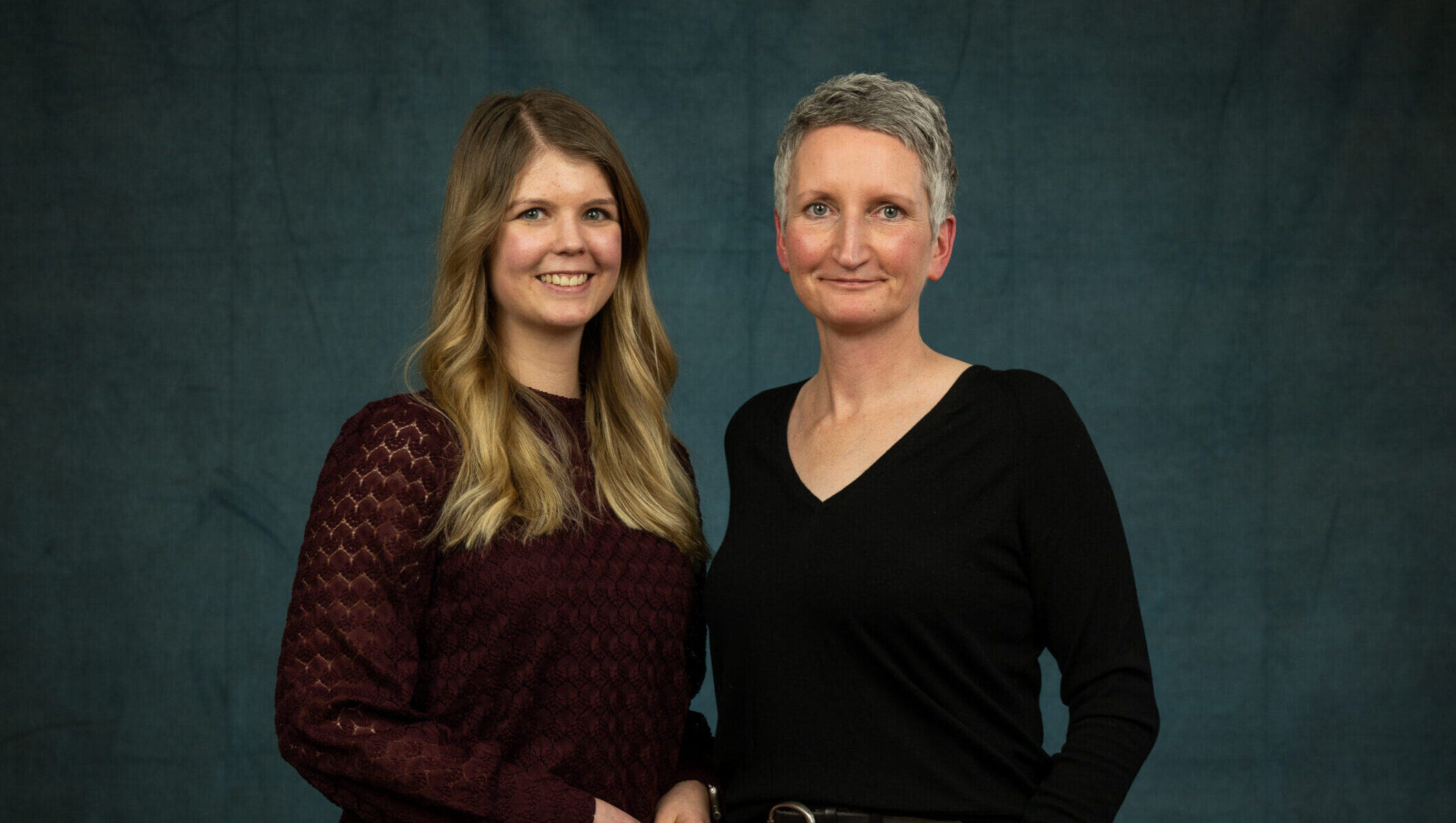

Knowledge transfer, start-up support, and dialogue are just a few of the many tasks of the knowledge transfer offices at the universities of Bremen and Oldenburg. In this interview, Anne-Kathrin Guder, head of UniTransfer in Bremen, and Franziska Gloeden, team lead for transfer in Oldenburg, discuss shared goals and effective collaboration.
Originally, the term “transfer” at universities meant implementing knowledge or technologies from research in the real world. Today, the concept is much broader. What does “transfer” mean to you?
Gloeden: At both universities, we define transfer as an enriching, reciprocal process of exchange between universities and stakeholders from business, politics, and society. We work across all disciplines and consistently develop programs based on research and teaching. In Oldenburg, we promote knowledge-based transfer in the region, focusing on three areas: shaping innovation, fostering dialogue between academic and non-academic sectors, and supporting career paths outside academia. For instance, we counsel students and researchers on starting businesses, offer science communication workshops, and organize events, BarCamps, and lectures at the Schlaues Haus.
Guder: Together, we focus on wide-ranging exchanges in which researchers and teaching staff cooperate with stakeholders from society, culture, education, politics, and business to start a dialogue. Unlike the University of Oldenburg, the University of Bremen has its own transfer office: UniTransfer. We act as a think tank, bringing together academic reflection and societal debates through flexible expertise and open, participatory formats. This is how we develop innovative knowledge transfer strategies. At the same time, we focus on clear and effective communication.
Start-ups are important for further developing research findings into technical and social innovations, among other things. What makes this collaboration special in terms of entrepreneurial support?
Guder: We work together in a coordinated manner, for example, when searching for the right team players for our start-ups. Additionally, our certified Young Entrepreneurs in Science coaches regularly offer cross-campus workshops. We gladly refer interested parties from Bremen to the EXIST Women program at the University of Oldenburg, which supports start-ups led by women or non-binary individuals. We trust one another and know that our founders are in good hands at the other university.
Gloeden: Start-up support is an important shared priority. Both universities are successful on a national level. The University of Bremen and the University of Oldenburg currently rank 14th and 15th, respectively, among large universities in the Gründungsradar rankings. A key project is the hoi startup factory, which both universities spearheaded in the Federal Ministry for Economic Affairs and Energy’s “EXIST-Startup Factories” competition.
Although the hoi startup factory was on the shortlist for the competition, it will not receive federal funding. What is the project about, and how is it being financed?
Guder: The hoi startup factory is a central component of entrepreneurial support: It enables close collaboration with small and medium-sized enterprises in the region from the initial stages of business formation. Our goal is for the startups to contribute to the region’s innovative capacity and for us to secure potential pilot customers early on. At the same time, we hope to secure better financing opportunities. In the past, a lack of capital has often led start-ups to leave the region. The start-up factory for the Northwest is primarily funded by companies in the region, as well as by the Bremen Chamber of Commerce and the Bremer Aufbaubank, among others.
How else do you plan to further develop start-up support within the Northwest Alliance?
Guder: We no longer think in terms of individual locations, but rather in terms of regions. In the field of social entrepreneurship, we plan to grow stronger together by raising awareness, supporting more start-ups, and increasing our visibility.
Gloeden: To contribute to the network’s effectiveness, we are pooling our strengths. The University of Bremen offers a supra-regional perspective through the statewide BRIDGE network. The University of Oldenburg enables broad integration of the rural region and close cross-border cooperation with our strategic partner university in Groningen.
What strengths does each university bring to the table to enhance dialogue with society as the Northwest Alliance?
Guder: Public engagement and participation play a major role. In Bremen, we provide centralized counseling to researchers on the design, implementation, and evaluation of participatory research. Additionally, there are decentralized activities within faculties and research institutes, particularly dialogue formats and collaborations with civil society. The Banking Hall in the Forum at Domshof building, for example, is a multifunctional meeting place that fosters interaction between the university and the local community, raising the university’s profile in the process. As a network, we aim to establish several more “third places” for dialogue, interactive knowledge sharing, and creative engagement with science throughout the region.
Gloeden: We also provide counseling to researchers, raise awareness around science communication, and design outreach formats. Schlaues Haus Oldenburg is a key venue for dialogue. Together with Jade University of Applied Sciences, we make a wide range of academic topics accessible. Knowledge transfer is also a central component of the strategic cooperation between the city and the University of Oldenburg. We directly involve interested parties in research to jointly produce region-relevant results. At the Healthcare Hackathon Oldenburg, for instance, creative minds from hospitals, outpatient care, nursing, and regional universities collaborate. Together, they develop ideas and innovative solutions to current challenges in the healthcare sector. Since 2022, there has also been a project office for knowledge transfer to the Papenburg region, dedicated to science communication in rural areas through formats such as “Heimspiel Wissenschaft.”
Guder: Collaboration within the Northwest Alliance allows us to expand location-specific activities to the entire region and involve more people in collaborating with science.
Looking to the future, where do you see the Northwest Alliance in terms of knowledge transfer in a few years?
Guder: The central theme of transdisciplinarity will shape our joint knowledge transfer work in the coming years. This means combining academic expertise with practical knowledge from civil society, politics, and business to better address complex societal challenges, such as climate change. Formats such as citizen science and co-creative projects are well-suited to integrating this principle across all areas of the alliance. Our knowledge transfer offices have the expertise to design, facilitate, and support these collaborative processes.
Gloeden: Through these efforts, we directly involve a diverse group of participants, including citizens, government agency representatives, and environmental organization representatives, in the Northwest Alliance’s research activities. Our goal is to find relevant, practical answers to the pressing questions of our time, such as those related to climate change adaptation and urban development. We want to think ahead, grow together, and strengthen trust in science. As a network, we aspire to be an active part of societal transformation processes.