

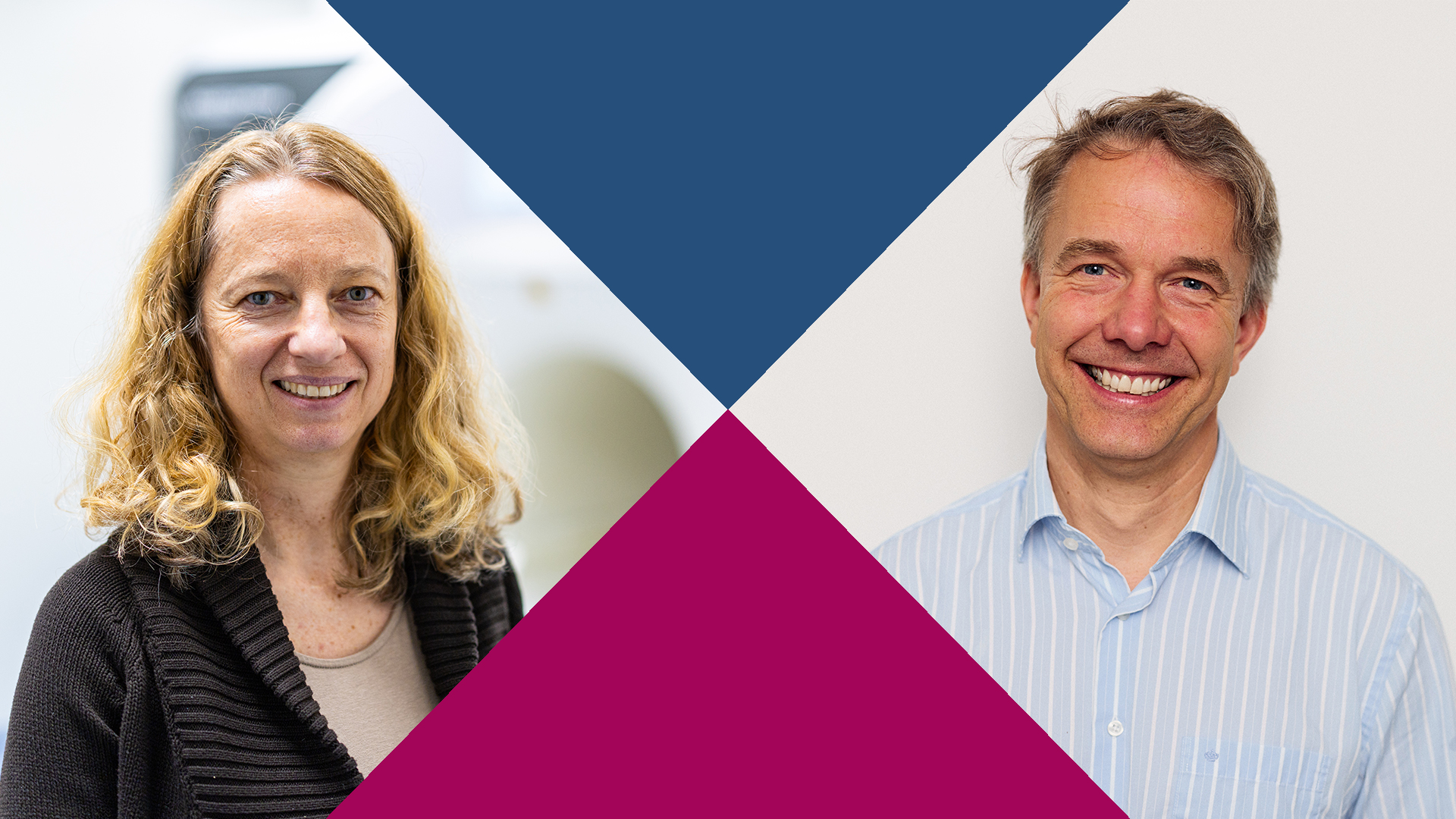

During the DFG’s annual General Assembly, Professor Lutz Mädler, a process engineer at the University of Bremen, was elected as a new Vice President of the Executive Committee. Professor Christiane Thiel, a psychologist at the University of Oldenburg, was elected as a new member of the DFG’s Senate.
The DFG is Germany’s largest research funding organization and the country’s central self-governing body for science. According to the 2025 annual report, the DFG supported 30,090 projects last year, with a combined funding volume of approximately 3.8 billion euros.
“Great technological and economic challenges lie ahead. To overcome them, we need not only excellent science, but also the courage to foster knowledge transfer and genuine exchange,” says Mädler. “I look forward to contributing my international perspectives and actively collaborating with my colleagues to help shape the research system.”
In his role on the Executive Committee, Professor Mädler will help develop the DFG’s strategic direction, address science policy issues, and draft rulings. The position also involves representing the academic community in dealings with policymakers, universities, and national and international organizations. Mädler will assume office on January 1, 2027. The University of Bremen has also been represented on the Executive Committee by Professor Kerstin Schill, who has served as an Executive Committee Vice President since 2019. The term of office for a vice president is four years, with the possibility of one reappointment for an additional four years.
Professor Christiane Thiel, spokesperson for the Hearing4all.connects Cluster of Excellence at the University of Oldenburg, was appointed Scientific Member of the Senate. The senate is the central academic committee that advises and decides on all significant DFG matters, unless they are reserved for the Joint Committee, the DFG’s central decision-making body. The Senate is responsible for all major decisions regarding research funding prior to individual funding decisions, as well as for all major decisions concerning the structure of the peer review, evaluation, and decision-making processes. The Senate also decides which Review Boards are to be formed and how they are to be organized. Starting in 2027, Thiel will represent the field of psychology. The University of Oldenburg is also represented in the Executive Committee by Prof. Dr. Susanne Boll, a computer science professor, while Professor Michael Schulz from the University of Bremen will serve until December 31, 2026 in the field of atmospheric, marine, and climate research.
“After six years on the DFG’s Psychology Review Board, I am looking forward to contributing my experience to the senate and contributing to the strategic development of research funding,” explains Thiel.
The senate has a total of 39 members, who also serve as academic members of the Joint Committee. Of the eight newly filled senate seats, two are in the humanities and social sciences, three in life sciences, two in the natural sciences, and one in engineering. The new terms begin on January 1, 2027.
Biographies
Lutz Mädler
Lutz Mädler is a professor of mechanical process engineering at the University of Bremen and director of the Process Engineering Division at the Leibniz Institute for Materials Engineering (IWT) in Bremen. His research encompasses the production, handling, and formulation of particles, as well as the design and investigation of particle interfaces. Mädler has received numerous awards for his work, most notably the DFG’S Gottfried Wilhelm Leibniz Prize in 2017. From 2016 to 2021, he served as spokesperson for the “Farbige Zustände” (Colored States) Collaborative Research Center, and since 2020, he has been the spokesperson for the HeteroAggregates DFG Priority Program. He has been a member of the Steering Board of the University of Bremen’s “The Martian Mindset: A Scarcity-Driven Engineering Paradigm” Cluster of Excellence since 2026. Mädler has long been involved in academic self-governance. Since 2020, he has been a member of the DFG’s Review Board for Process Engineering, Technical Chemistry, and has served as its chairperson for the past two years. He will step down from this position at the end of the year, following his election as vice president.
Christiane Thiel
Professor Christiane Thiel has been teaching and researching in biological psychology since 2005 at the University of Oldenburg’s Faculty of Medicine and Health Sciences. She has been part of the Hearing4all Cluster of Excellence since it began in 2012 and has been an advisory board member since 2018. She assumed the role of spokesperson for the cluster’s third funding period, which began on January 1. She also heads the DFG-funded Research Training Group on Neuromodulation. Thiel’s research focuses on the relationship between hearing impairments and changes in the aging brain.
She is also deeply involved in the university’s academic self-governance and various professional associations. She served as Dean of the Faculty of Medicine at the University of Oldenburg from 2016 to 2019 and Vice President for Research and Transfer from 2022 to 2023. As an expert in research ethics, she served on the ethics committee of the German Psychological Society from 2011 to 2022. From 2021 to 2025, she was a member of the Executive Committee of the German Neuroscience Society (NWG). Since 2020, she has been a member of the DFG’s Psychology Review Board.