Media Service

Information for the Media Regarding the Excellence Strategy’s Decision

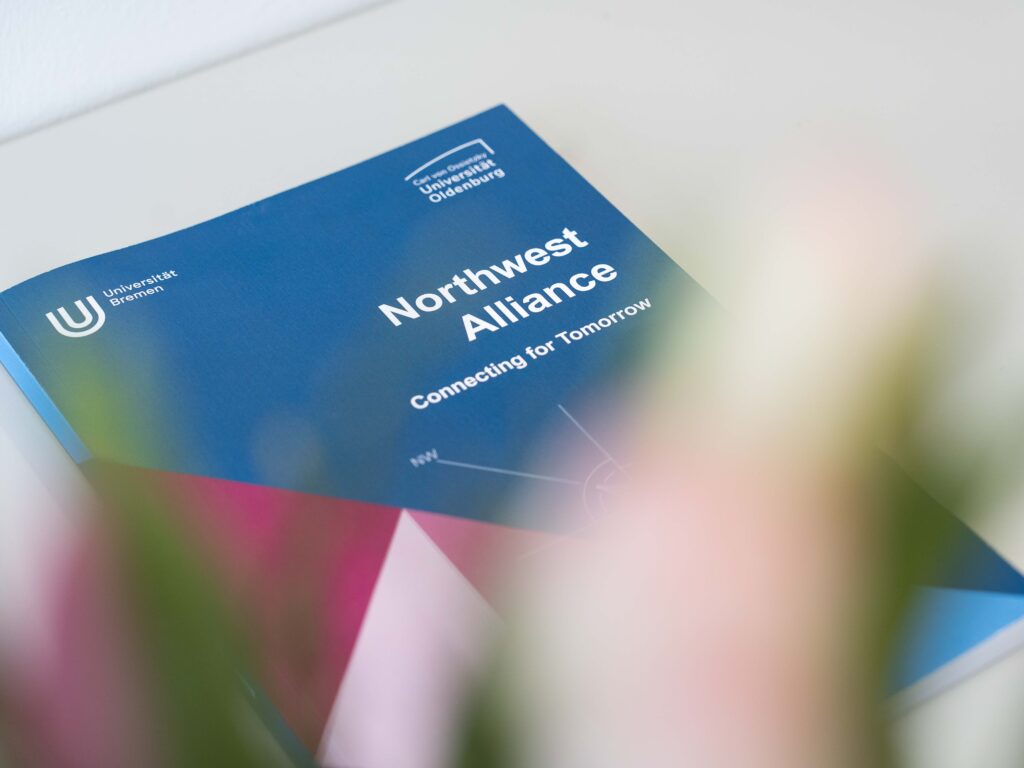
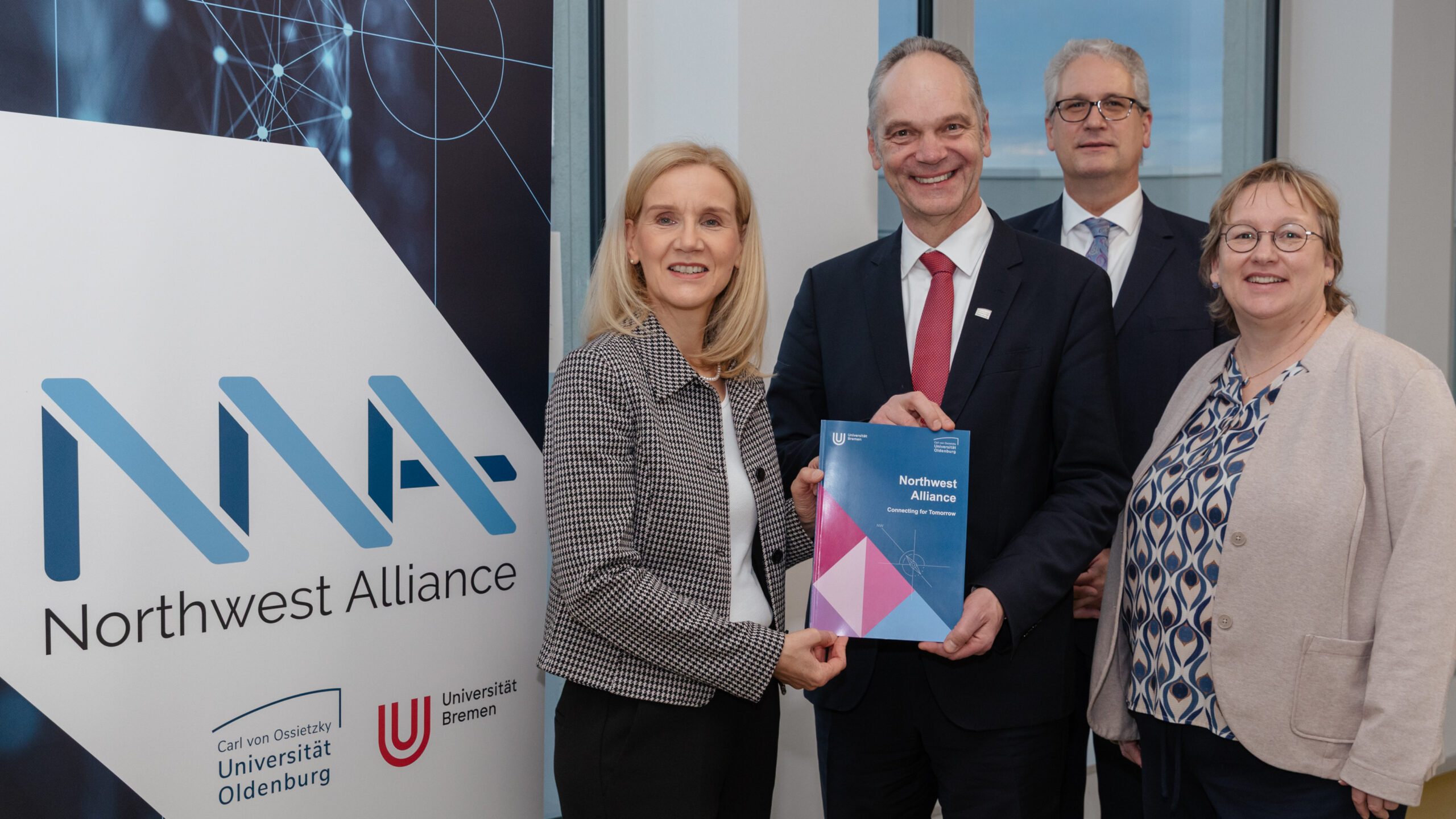
A brochure with the words “Northwest Alliance - Connecting for Tomorrow” is lying on a table.

Newly funded Universities of Excellence and University Excellence Consortia will be announced on October 2

On October 2, 2026 at 4 p.m., the German Research Foundation (DFG) and the German Science and Humanities Council will announce whether the University of Bremen and the University of Oldenburg, together as the Northwest Alliance, will receive support for seven years as a University Excellence Consortium.

The press conference will be available via livestream on the German Science and Humanities Council’s YouTube channel

Further information on the Excellence Strategy of the German federal and state governments

Media Contact

Universität Bremen

Kristina Logemann, Press Spokesperson

University Communication and Marketing

+49 421 218-60150

Carl von Ossietzky Universität Oldenburg

Dr. Corinna Dahm-Brey, Press Spokesperson

Press & Communication Office

+49 441 798-5374

Download Royalty-Free Images

Legal Notice

You may use the royalty-free images located here for editorial coverage of the Northwest Alliance. The context relating to the Northwest Alliance must be clearly recognizable. Commercial use is prohibited. Images must include the respective copyright notice.

A brochure with the words “Northwest Alliance - Connecting for Tomorrow” is lying on a table.

Connecting for Tomorrow – Application for Recognition as a University Excellence Consortium
Copyright: Leona Hofmann / Universität Bremen

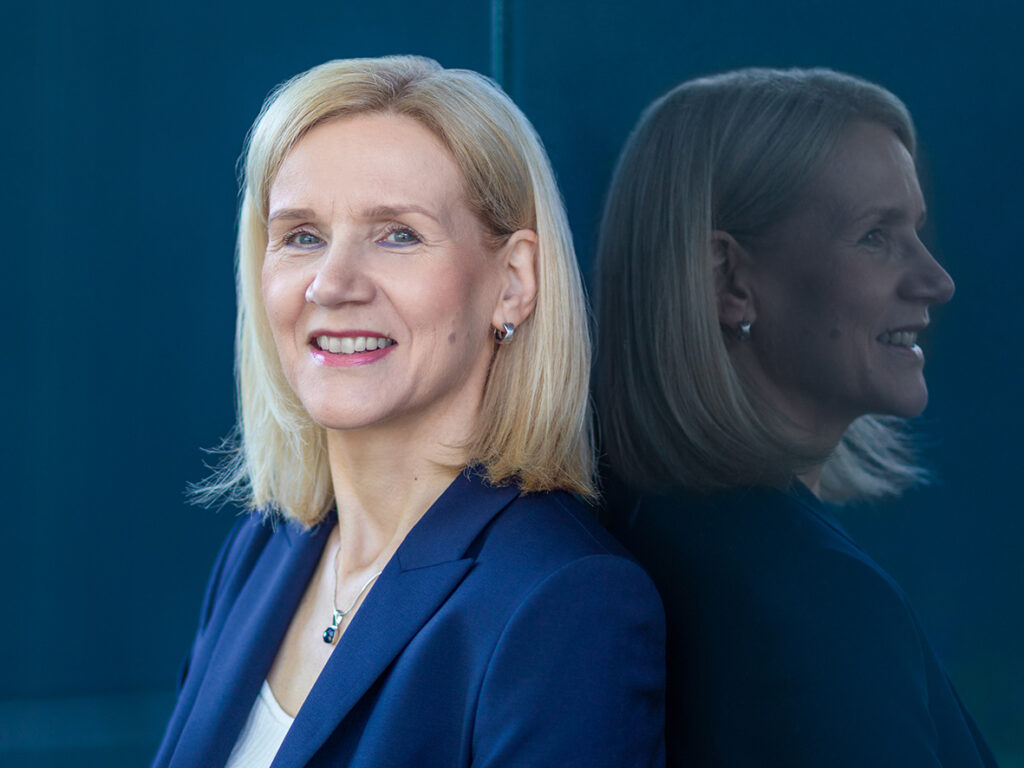
Jutta Günther

Prof. Dr. Jutta Günther, President of the University of Bremen
Copyright: Matej Meza / Universität Bremen

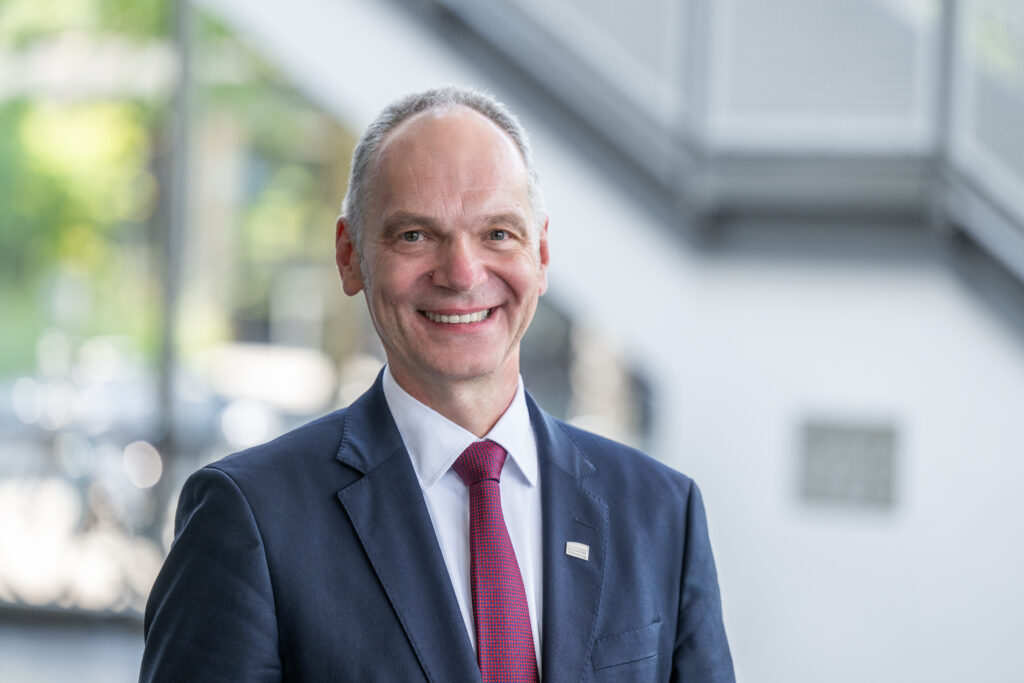
Professor Ralph Bruder

Prof. Dr. Ralph Bruder, President of the University of Oldenburg
Copyright: Universität Oldenburg / Daniel Schmidt

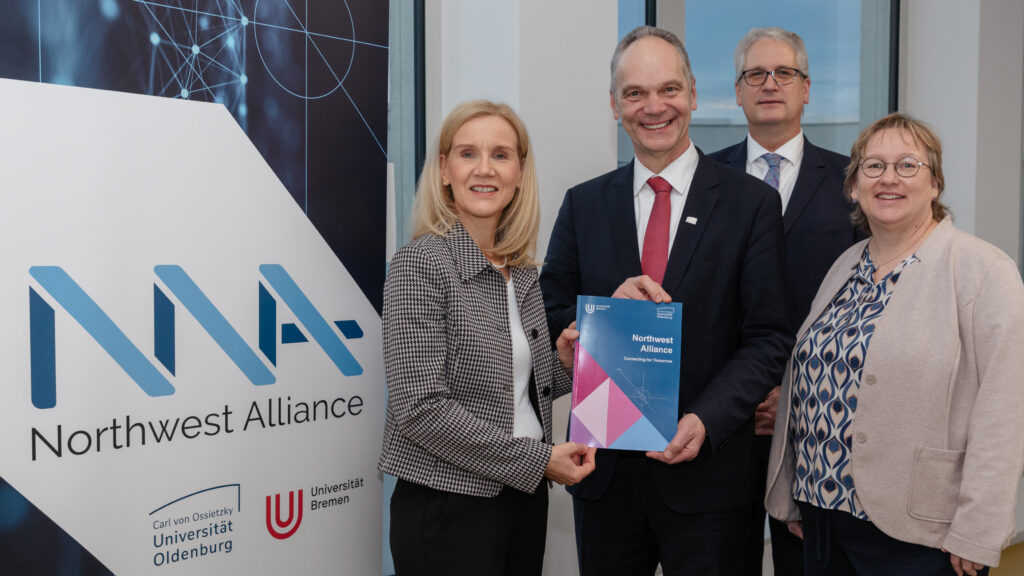
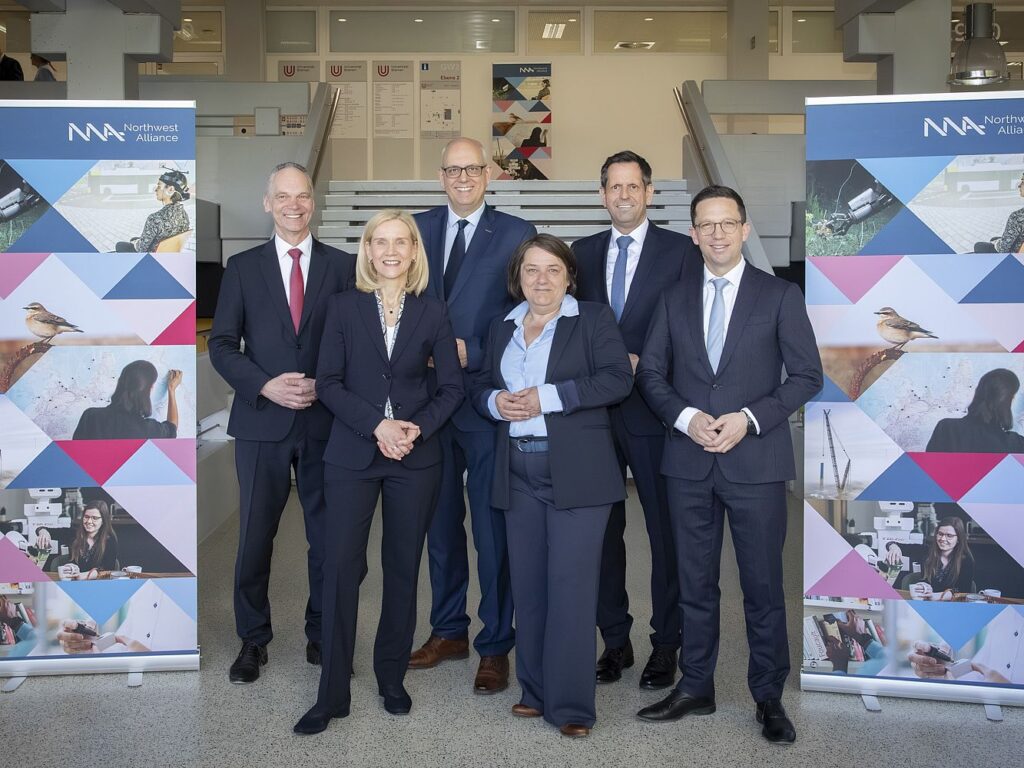
Delighted with the joint proposal (from left to right): Jutta Günther, President of the University of Bremen, Ralph Bruder, President of the University of Oldenburg, Jörg Stahlmann, Vice President of the University of Oldenburg, and Frauke Meyer, Director of Finance and Administration of the University of Bremen.
Copyright: Matej Meza / Universität Bremen

Important Milestone in Excellence Strategy: International Reviewers Visit the Campus
News

Important Milestone in Excellence Strategy: International Reviewers Visit the Campus

This week, the Northwest Alliance reached an important milestone in the Excellence Strategy. On April 28 and 29, 20 international reviewers visited the Bremen campus to assess the joint Excellence proposal submitted by the University of Bremen and the University of Oldenburg.

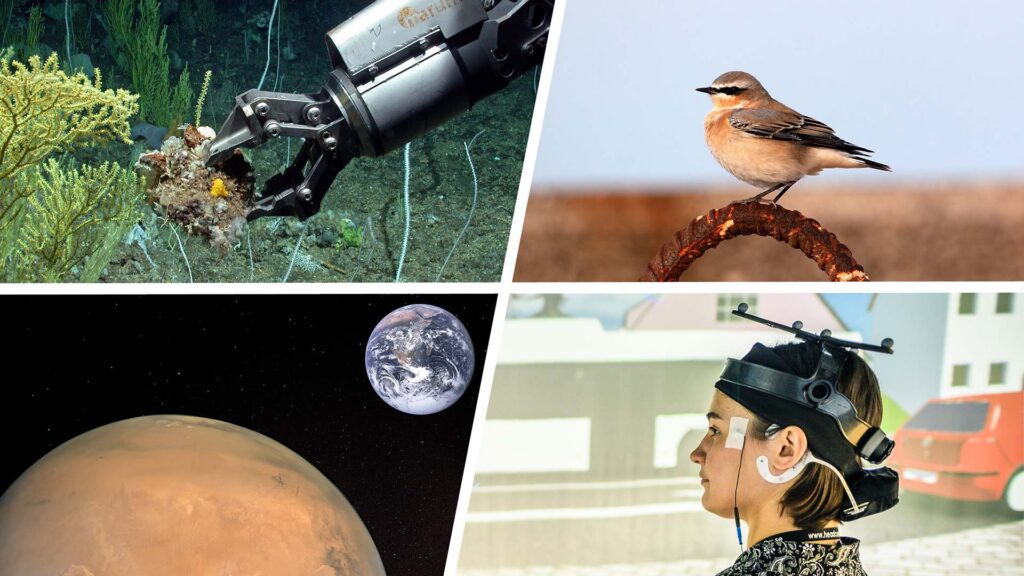
Marine research, animal navigation, materials sciences and technologies and hearing research are the topics of the four approved Clusters of Excellence of the Universities of Bremen and Oldenburg.
News

Launch of Four Clusters of Excellence in Oldenburg and Bremen

From the ocean floor to Mars, from human hearing to animal navigation abilities – researchers in the four Clusters of Excellence at the universities of Oldenburg and Bremen are focusing on a wide variety of topics. The teams began their work at the beginning of the year. We present a brief overview of the Clusters here.

Connecting for Tomorrow: Excellence proposal submitted
News

Connecting for Tomorrow: Excellence proposal submitted

„Northwest Alliance: Connecting for Tomorrow” – this is the title under which the Universities of Oldenburg and Bremen have submitted their application for a University Excellence Consortium. The decision on funding will be made in October next year.

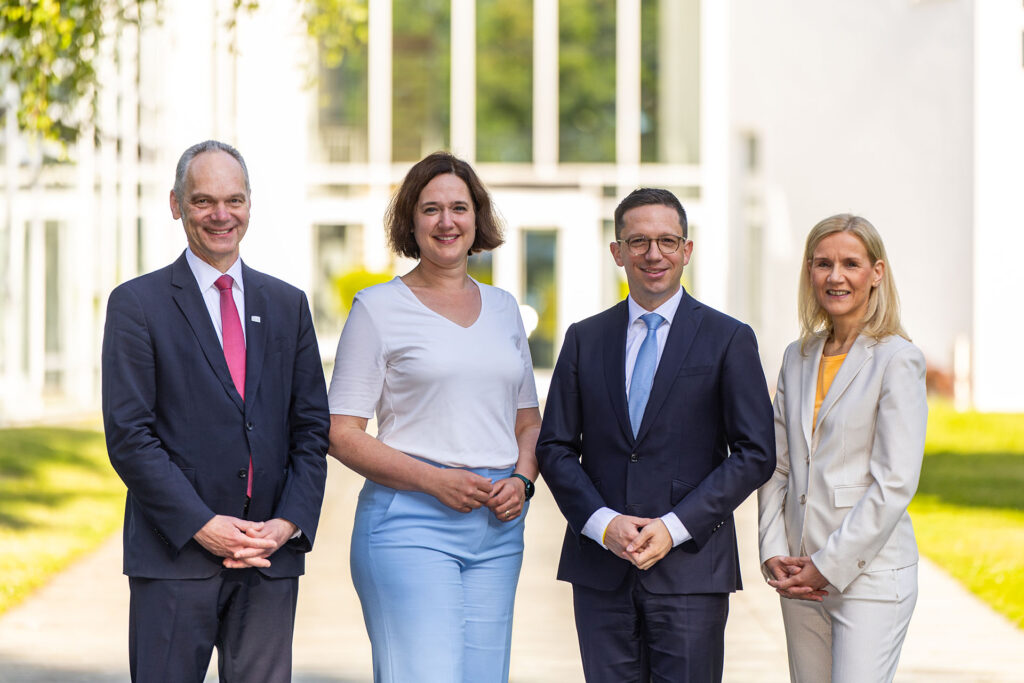
Photo of Ralph Bruder, Kathrin Moosdorf, Falko Mohrs, and Jutta Günther, with a HWK Institute for Advanced Study building in the background.
News

University of Excellence: Universities of Oldenburg and Bremen Join Forces

The universities of Bremen and Oldenburg want to move into the future as a University Excellence Consortium. The two universities submitted their letter of intent to the German Science and Humanities Council (Wissenschaftsrat, WR) today, meeting the deadline.

The Northwest Alliance brings together two reform-oriented universities with decades of experience in research, teaching, and knowledge transfer. Together, with approximately 580 professorships, 6,600 staff members, 2,700 doctoral candidates, and 33,500 students, they form the heart of a high-performing research hub in the Northwest. The alliance’s goal is to combine excellent research with social responsibility and to find innovative solutions for regional and global challenges. The region is to be developed into a coherent research and outreach area in the medium to long term. The numerous scientific and non-scientific institutions in the northwest, with which both universities are already connected, as well as the Hanse-Wissenschaftskolleg, which has been acting as a link between the universities for more than 25 years, will play a central role in this. The alliance also sees itself as part of the international community, in close partnership in particular with the Rijksuniversiteit Groningen (Netherlands), with which both universities have been cooperating for decades. The Northwest Alliance not only connects the federal states of Bremen and Lower Saxony, but also represents a strong international network in a European border region.

Information About the Clusters of Excellence

In the Cluster of Excellence “The Ocean Floor – Earth’s Uncharted Interface,” the universities of Bremen and Oldenburg pool their expertise to further advance our understanding of the role of the ocean floor in biogeochemical cycles and biodiversity under changing climatic conditions. The cluster’s research will provide a scientific basis for the protection and sustainable use of the oceans.

The ocean floor acts as a dynamic interface and fulfils wide-ranging functions for the entire Earth system. The researchers in the cluster investigate the processes that control global matter fluxes towards, above, and in the ocean floor. This involves deciphering the processes that regulate the transport of biogenic particles to the ocean floor and their transformation under changing environmental conditions, analyzing the transfer of carbon and other elements between the ocean floor and seawater, and understanding how ecosystems on the ocean floor react to environmental changes.

Download Factsheet (May 2025)

Website

MARUM Roboter

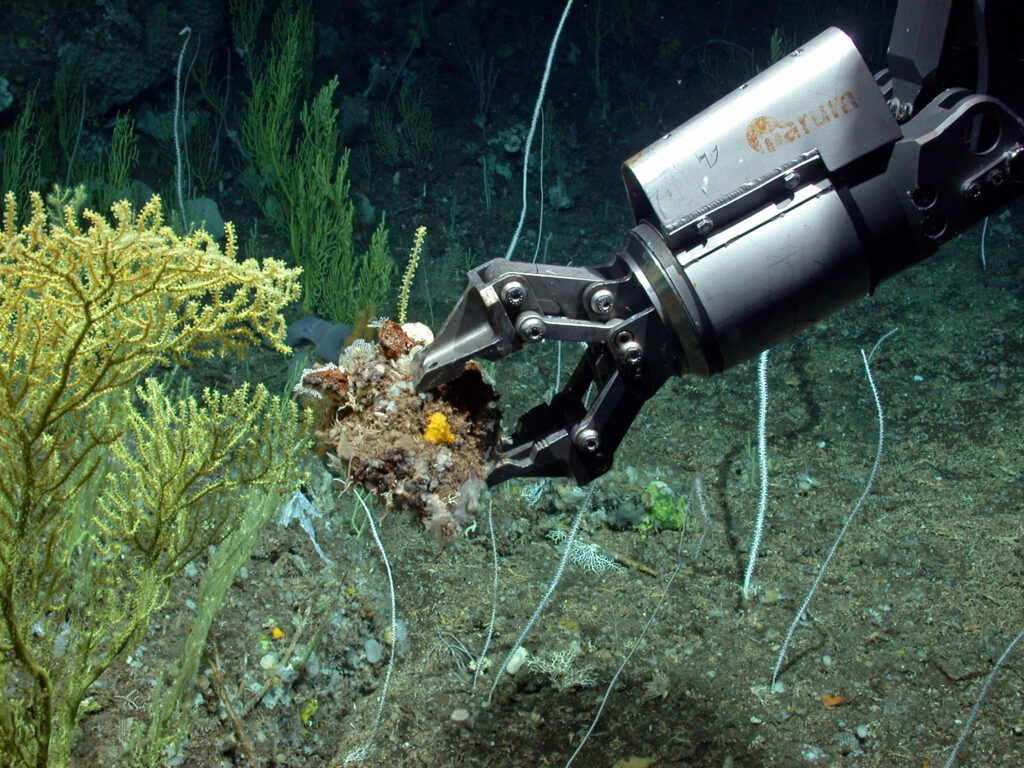
Sampling with the gripper arm of the MARUM-QUEST submersible robot at a depth of 270 meters on the Azores Plateau on the Mid-Atlantic Ridge.
Copyright: MARUM − Zentrum für Marine Umweltwissenschaften, Universität Bremen

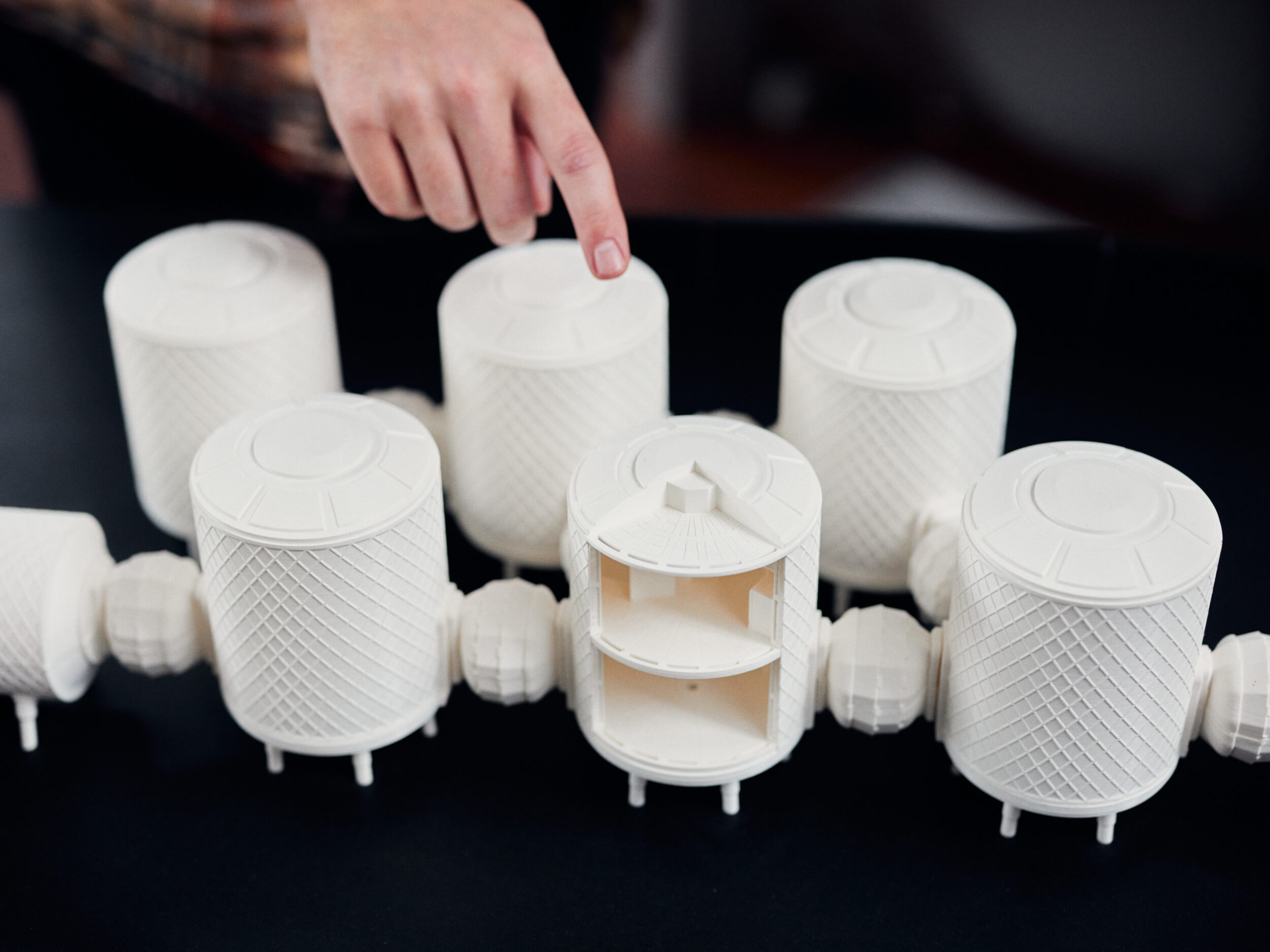
The interdisciplinary cluster team at the University of Bremen and its partner institutions brings together researchers from the materials science, process engineering, manufacturing engineering, aerospace engineering, robotics, psychology, and communication technology. Together, the scientists are adopting a “Martian mindset” in order to rethink the production of materials and components from the ground up. The scarcity of resources and extreme conditions on the red planet serve as an experimental setting to develop a new paradigm of sustainability that enables innovative resource and energy-saving processes for material extraction and processing. In the long term, the cluster will thus contribute to sustainable space exploration and, above all, promote eco-friendly practices on Earth.

Download Factsheet (September 2026)

Website

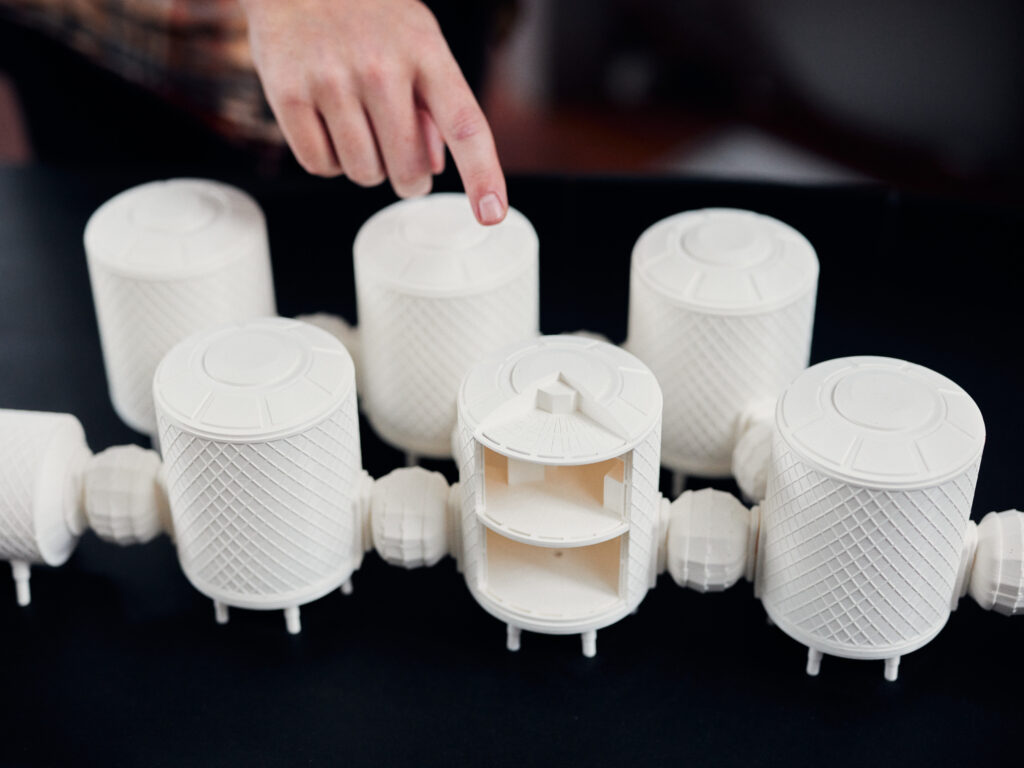
Finger zeigt auf Plastikfiguren
MaMBA (Moon and Mars Base Analog) is being used to research habitats for long-term stays on the Moon and Mars. A life-size module is on display at the Center for Applied Space Technology and Microgravity (ZARM) and is being converted for the Cluster into a control center for a production hall similar to one that might be found on Mars.
Copyright: Patrick Pollmeier / Universität Bremen

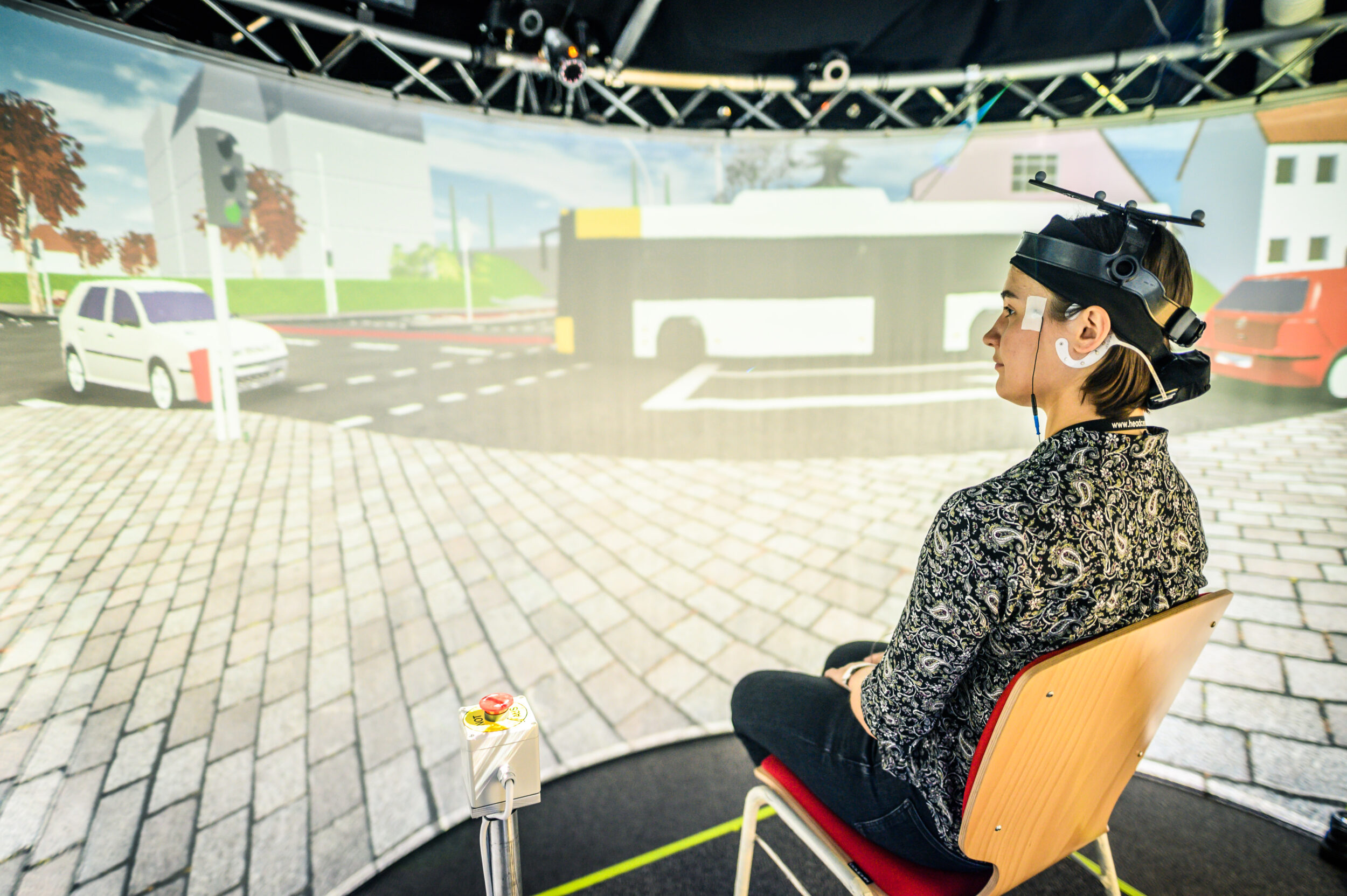
The researchers involved in the Hearing4all Cluster, a joint endeavor of the University of Oldenburg, Hannover Medical School, and Leibniz University Hannover, aim to improve the prediction, diagnosis, and treatment of hearing loss. Hearing4all (H4a) has already achieved significant results over the course of two previous funding periods since 2012. Under the new guiding principle Hearing4all.connects, the research alliance will expand to include additional disciplines, enabling an even more comprehensive investigation of hearing loss. In the coming years, researchers will pursue new genetic approaches to predicting, diagnosing, and treating hearing loss. They will also explore how artificial intelligence can enable hearing aids and cochlear implants to distinguish more effectively between important and irrelevant sound sources. Another key area of research involves the development of shared data standards. These standards will enable the training of AI-based systems that can predict an individual’s probability of hearing loss.

Download Factsheet (May 2025)

Website

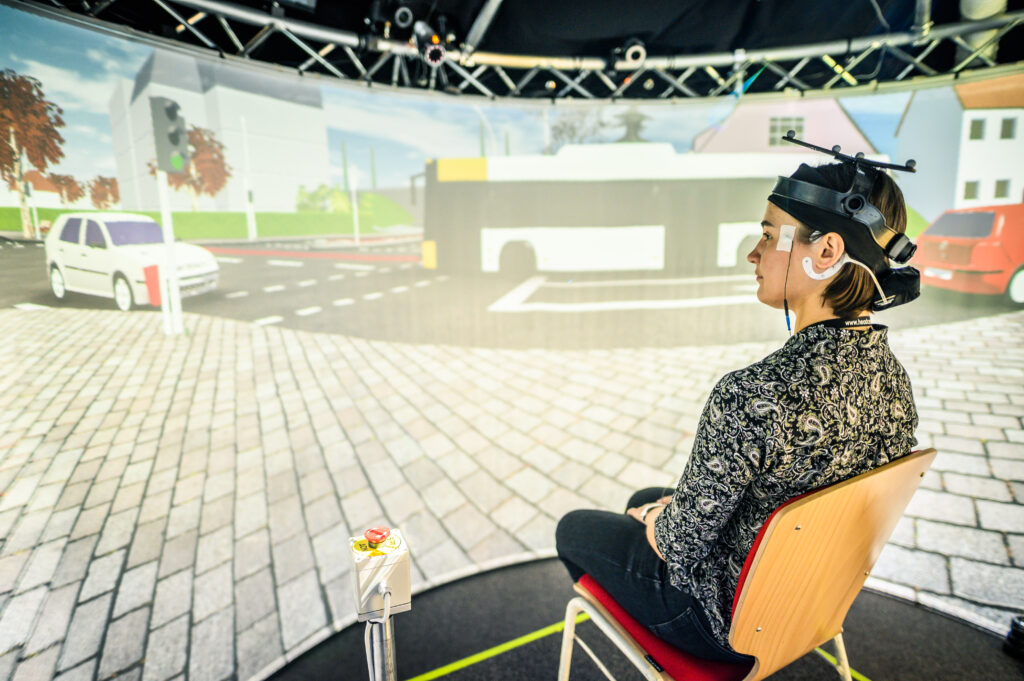
Frau sitzt auf einem Stuhl, sie trägt ein Gerät auf dem Kopf

The hearing researchers in Oldenburg investigate very different facets of hearing and use highly specialised. laboratories. To find out which sound sources a person focuses their attention on, for example, they have set up a gesture lab in which hearing tests can be carried out in a virtual environment that is as lifelike as possible. Copyright: Hörzentrum Oldenburg gGmbH

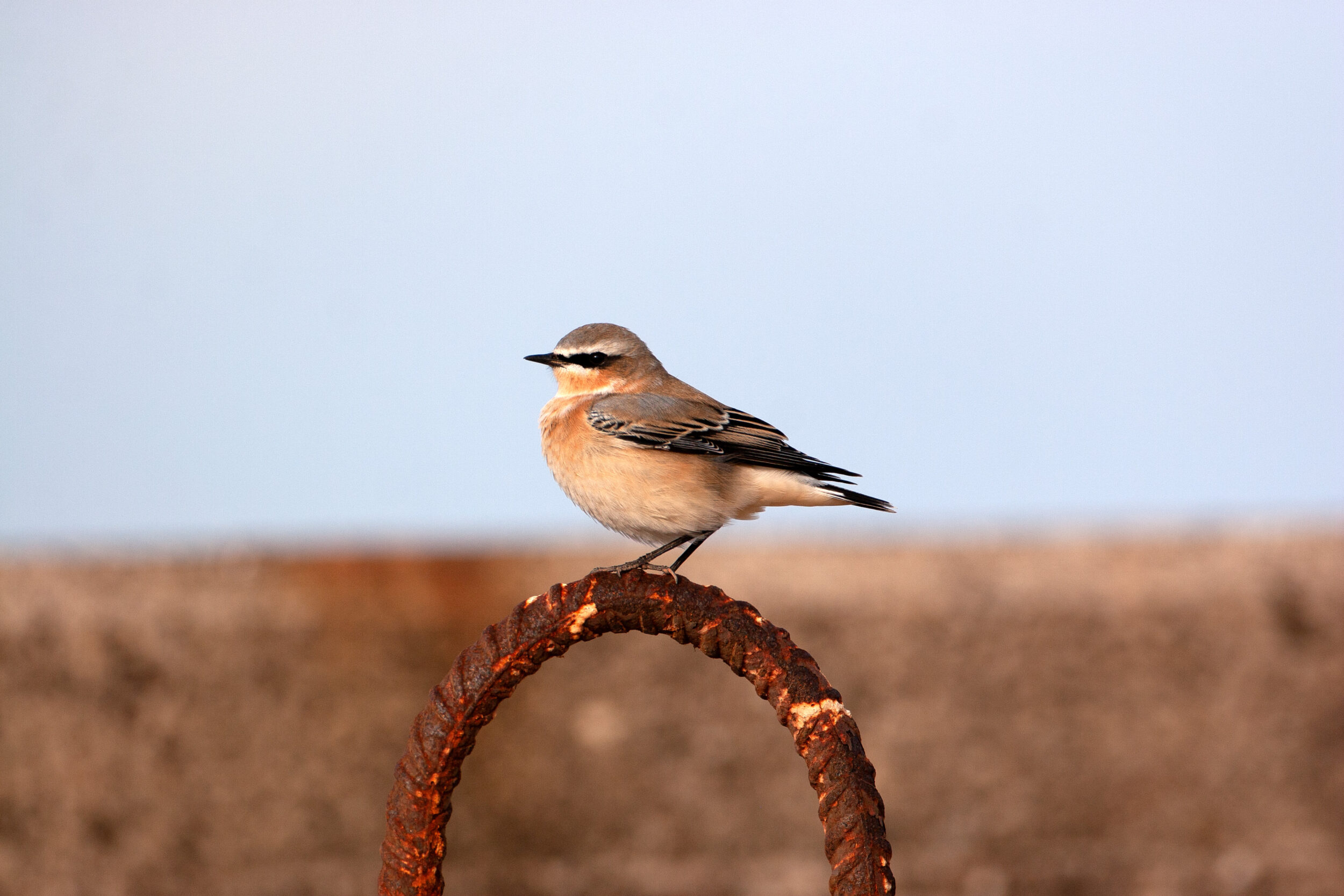
The mission of the NaviSense team at the University of Oldenburg is to gain a thorough understanding of how animals navigate over long distances. Its findings will be incorporated into nature conservation strategies and technological innovations such as quantum technologies and autonomous navigation systems. The team’s research is divided into four research foci: In the first, the underlying mechanisms of magnetoreception and other senses that animals use to navigate are investigated. The magnetic and celestial compass as well as the processing of sensory information in the brain are also studied in detail. As the magnetic sense of birds seems to be based on a quantum effect, the second research focus is on quantum physical phenomena – in particular phenomena which occur at ambient temperature, like magnetoreception. Most of today’s quantum technologies can only be implemented at extremely low temperatures. Therefore, it would be a major step forward if we can understand how quantum physical processes can be controlled at higher temperatures.

Download Factsheet (May 2025)

Website

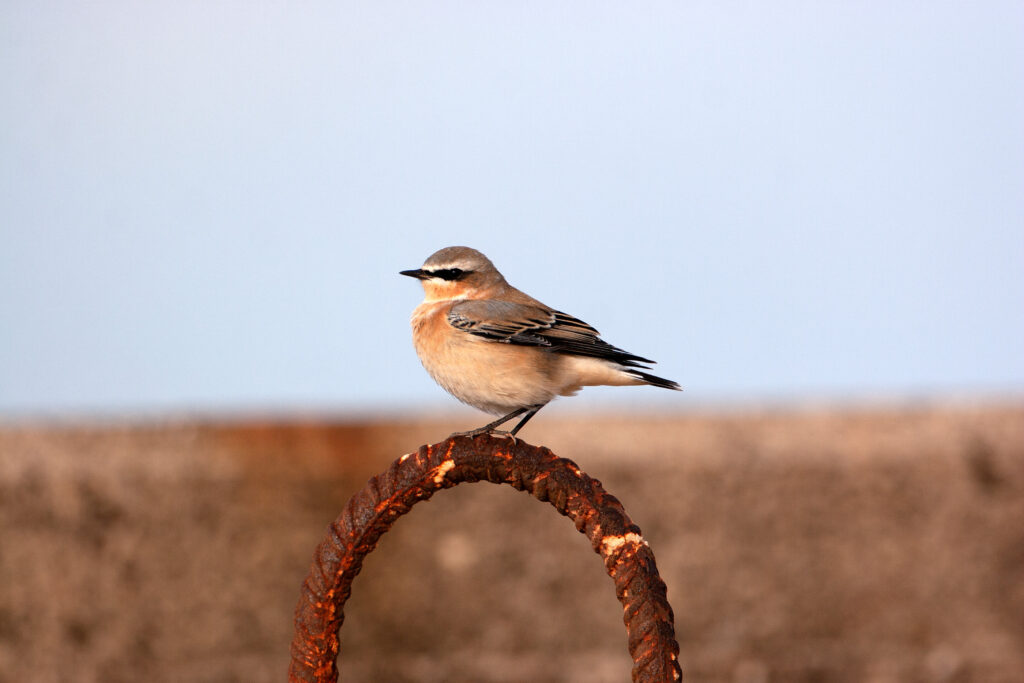
Rotkehlchen

Like many other small songbird species, wheatears migrate alone at night to their wintering grounds in Africa. They often make a stopover on the German island of Helgoland. The NaviSense researchers plan to investigate their migratory behaviour in more detail. Copyright: Heiko Schmaljohann