

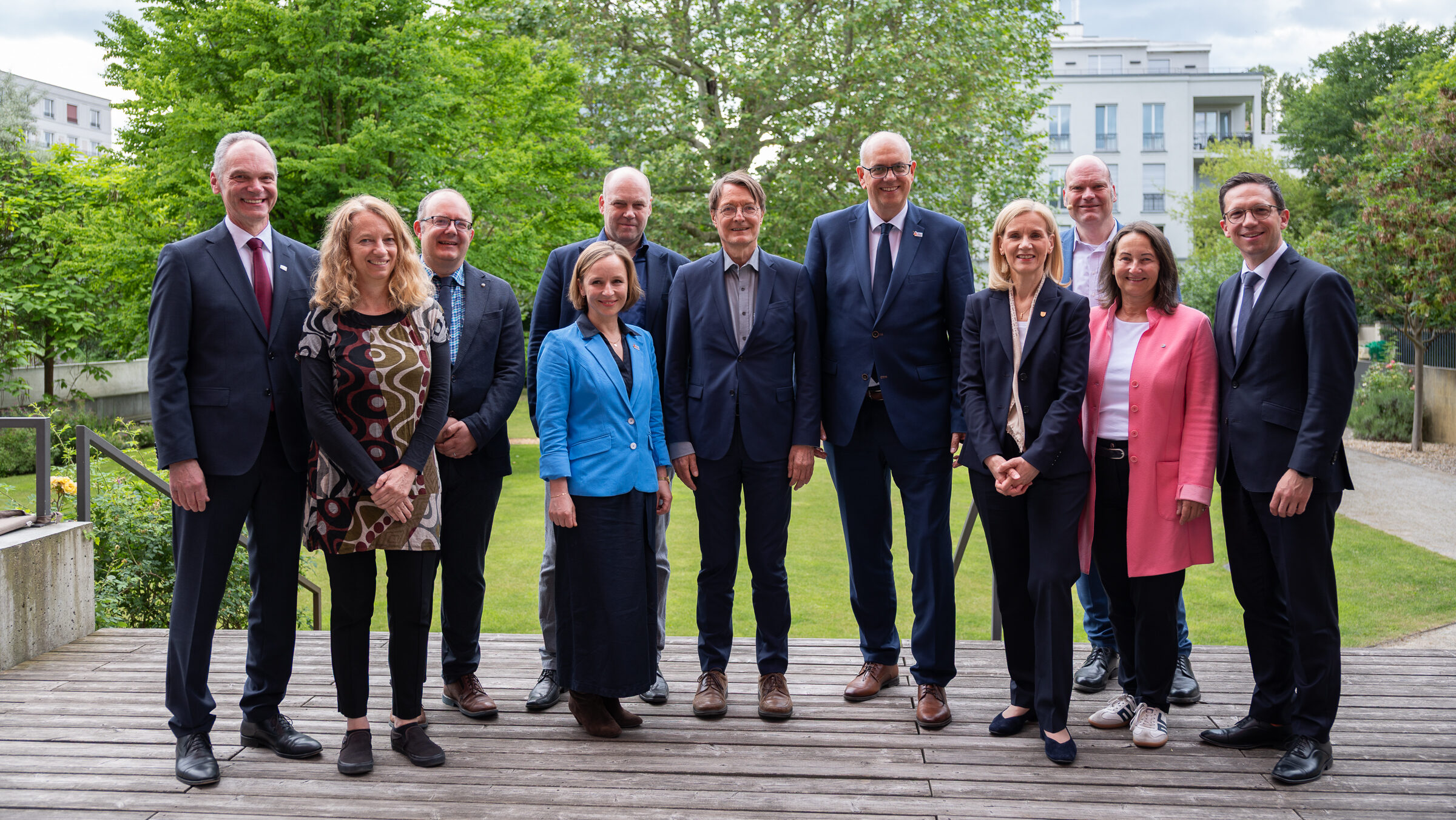

Last night, June 10, at the State Representation of Bremen in Berlin, the University of Bremen and the Carl von Ossietzky University of Oldenburg presented the Northwest University Excellence Consortium together with Bundesrat President Dr. Andreas Bovenschulte.
This alliance is a collaborative project between the two academic centers, which have applied for “University of Excellence” status under the federal and state governments’ Excellence Strategy. The alliance emphasizes the importance of university collaboration during a time of significant societal and technological challenges.
Under the title “Many Strengths – One Alliance: Radical Innovations & High-Tech from the Northwest,” the two universities presented their shared vision of a high-performing, internationally visible, and future-oriented research region.
The Northwest Alliance unites two research-intensive, reform-oriented universities that have collaborated successfully for years. Through their application for the title of “University of Excellence,” the partners intend to combine their academic strengths, develop innovative research areas together, and stimulate science, business, and society. The alliance exemplifies a modern form of collaboration that is cooperative rather than competitive and regionally rooted yet internationally networked.
Dr. Andreas Bovenschulte, President of the Bundesrat and President of the Senate of the Free Hanseatic City of Bremen:
“The Northwest Alliance is cooperation in action. This alliance is particularly important for Bremen and Lower Saxony, as demonstrated by its achievements and supported clusters. The Bremen Senate fully endorses this alliance, and we eagerly await October 2, when the Excellence Strategy commission will announce its decision. We’re keeping our fingers crossed.”
Prof. Dr. Jutta Günther, President of the University of Bremen, and Prof. Dr. Ralph Bruder, President of the Carl von Ossietzky University of Oldenburg, discussed the goals, idea, and strategic vision behind the Northwest Alliance. They provided insights into the collaboration between the two universities and highlighted how joint research structures are emerging and how international cooperation is being implemented.
Prof. Dr. Jutta Günther, President of the University of Bremen:
“The success of our four Clusters of Excellence shows that cutting-edge research does not originate solely in Germany’s traditional centers of science. And yet, these clusters are only a small part of the diverse cutting-edge research and innovative strength that characterize the northwest region. With two strong, reform-oriented universities working closely with a multitude of non-university institutes, we are unlocking significant research potential that, thanks to our strategic cooperation with the University of Groningen, points toward European excellence.”
Prof. Dr. Ralph Bruder, President of the Carl von Ossietzky University of Oldenburg:
“The strength of the Northwest Alliance lies in its connections: between our two universities and their regional and international partners, between the two federal states, between Germany and the Netherlands, and between science and society. Cutting-edge research and social responsibility go hand in hand. I am convinced that it is this unique capacity for cooperation above all else that enables us to make — and will make — a decisive contribution to addressing the major challenges of our time.”
The alliance’s scientific capabilities were impressively demonstrated in the presentations of the four Clusters of Excellence: “NaviSense,” “Hearing4All.Connects,” “The Ocean Floor,” and “The Martian Mindset.” The cluster spokespersons provided insights into research projects ranging from intelligent sensor systems and innovative hearing research to the exploration of the deep sea and Mars. They illustrated how the universities of Bremen and Oldenburg, together with their research networks, are developing answers to key questions about the future and driving technological innovation.
Through close collaboration with the University of Groningen, a cross-border scientific space is emerging that sets standards across Europe and opens up new perspectives for research, teaching, and knowledge transfer.
Prof. Dr. Karl Lauterbach, a member of the Bundestag and chairperson of the Committee on Research, Technology, Space, and Technology Assessment, delivered the opening remarks. He praised the two universities’ role in advancing Germany’s innovative capabilities through excellent research. Science journalist Dr. Jan-Martin Wiarda served as the evening’s emcee.
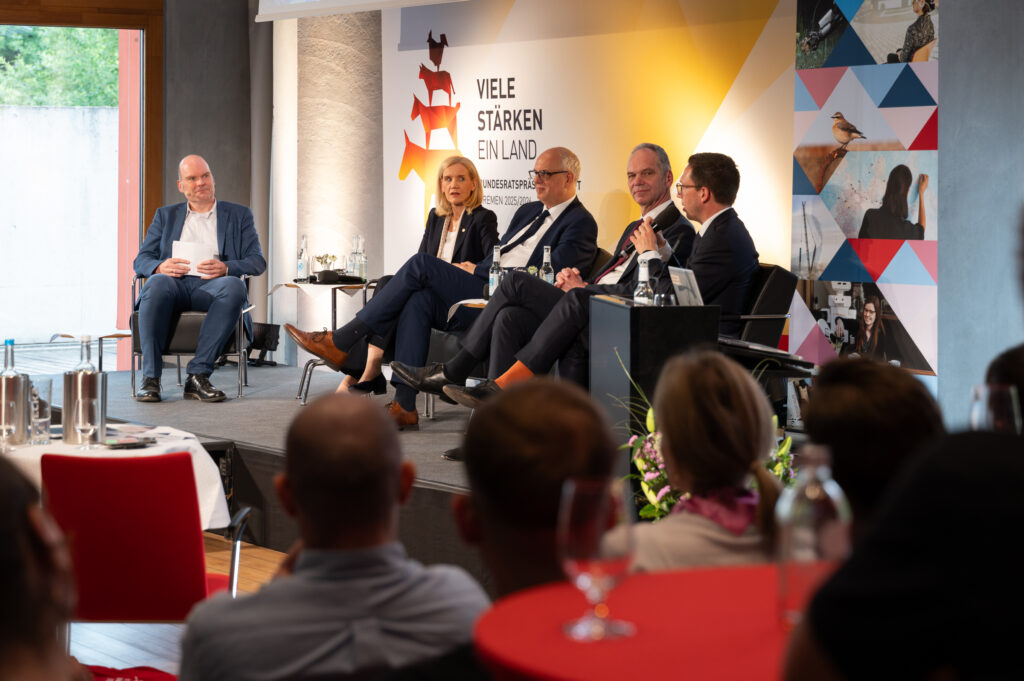
To wrap things up, Professor Dr. Jutta Günther, Professor Dr. Ralph Bruder, Dr. Andreas Bovenschulte, and Falko Mohrs, Lower Saxony’s Minister for Science and Culture, talked about the future of science and innovation policy in Germany and the Northwest. They concluded that strong academic alliances, such as the Northwest Alliance, are crucial for successfully addressing the major challenges of the coming decades.
The reception that followed offered the more than 100 guests an opportunity for personal conversation and networking. The discussions revealed that the Northwest Alliance is already regarded as one of Germany’s most ambitious and forward-looking academic projects and that excellent science can reach a wider audience.
Thus, the parliamentary evening sent a strong signal for the future of the Northwest metropolitan region and its economic and academic hub. The Northwest Alliance is based on the idea that academic excellence is achieved by combining strengths, overcoming boundaries, and pursuing shared visions. Bremen and Oldenburg impressively demonstrated the potential of their partnership in Berlin.