


For a wind turbine to operate reliably and efficiently, many components must work together. Sensors measure wind speed and temperature, control systems adjust the position of the rotor blades, and software monitors operations and helps to quickly identify errors. All of these functions are carried out by digital hardware. Wind turbines are thus examples of digitally controlled cyber-physical systems in which software and hardware interact with the physical world. The computer science fields involved are diverse, ranging from computer architecture to software engineering, artificial intelligence, and energy informatics. All of these fields converge together in the CAUSE Research Training Group. This is a prime example of how the research focuses of the universities of Bremen and Oldenburg complement each other within the Northwest Alliance.
In 2024, the German Research Foundation (DFG) granted the CAUSE (Concepts and Algorithms for – and Usage of – Self-Explaining Digitally Controlled Systems) Research Training Group approximately eleven million euros for a period of five years. The University of Bremen, the University of Oldenburg, and the Hamburg University of Technology are collaborating on this project. Thirty-one doctoral candidates are investigating various aspects of the interaction between digitally controlled technical systems, using wind turbines as an example.
“CAUSE clearly demonstrates how well Bremen and Oldenburg complement each other in computer science”
“Wind turbines are tangible examples of cyber-physical systems, meaning systems that combine physical and digital elements,” says Rolf Drechsler, a computer architecture professor at the University of Bremen and CAUSE’s Bremen spokesperson. The goal of the research training group is for such systems to be able to explain themselves, for example, by providing technicians with detailed, easy-to-understand instructions on where errors lie.
To make this happen, a variety of different areas of expertise are being brought together. “CAUSE clearly demonstrates how well the universities along the Hamburg-Bremen-Oldenburg axis complement each other in computer science,” says Martin Fränzle, a professor of cyber-physical system networks in the computer science department at the University of Oldenburg and the Oldenburg spokesperson for CAUSE. “Until now, the ability of technical systems to explain their behavior has primarily been required in the application of artificial intelligence. However, this need exists for every complex system, and we want to close this gap together.”
Minds, Media, Machines is one of the University of Bremen’s five high-profile research areas. A team of 41 professors and 352 researchers work here on topics ranging from robotics to artificial intelligence to data science. At the University of Oldenburg, Humans and Technology is one of three central future topics. The Cooperative Critical Systems research focus, which is home to the CAUSE Research Training Group, is a key component of this theme.
Hardware and Software Provide Joint Explainability
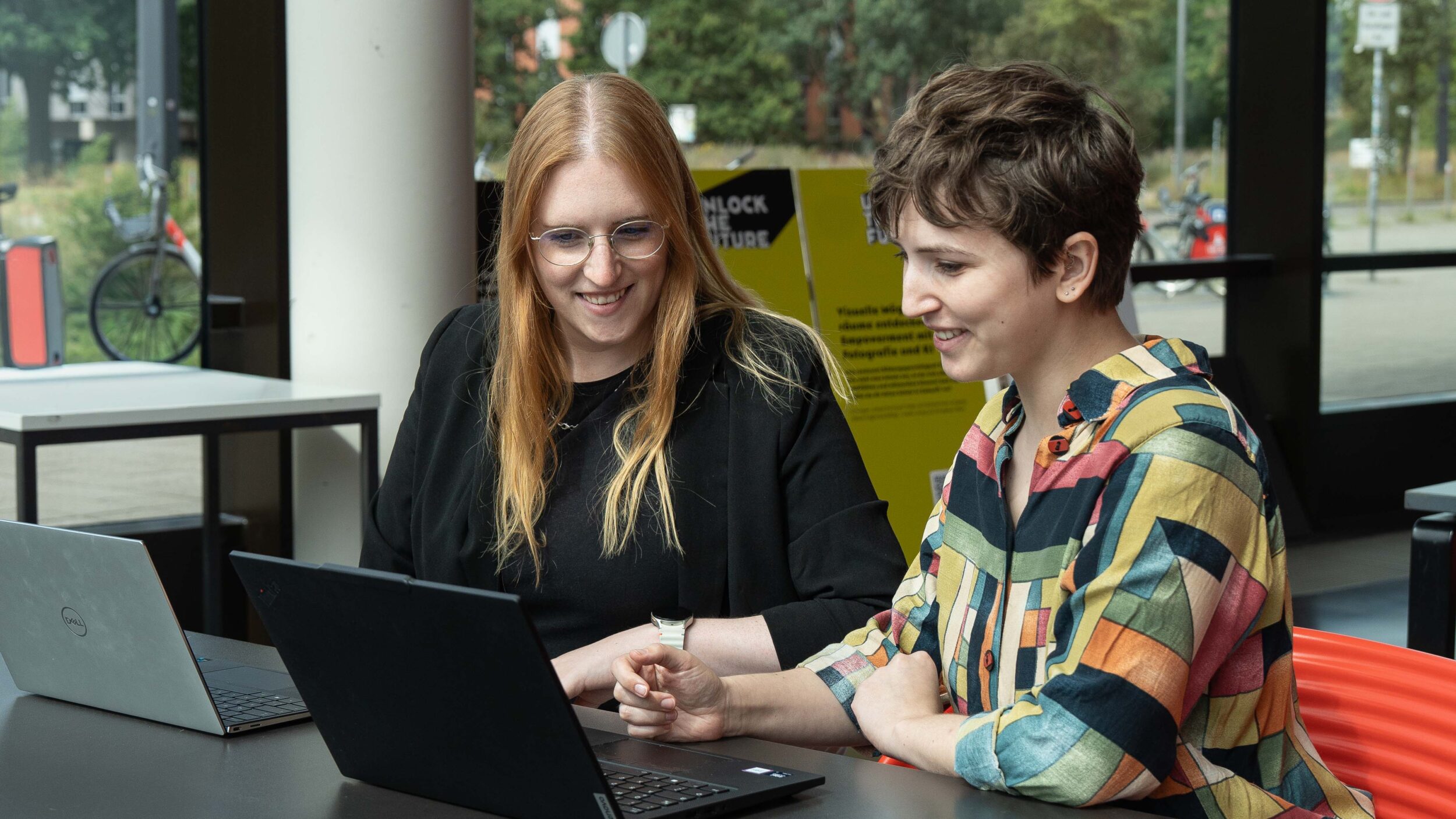
The example of Caroline Dominik and Nicola Thoben illustrates what research and collaboration between the universities can look like in practice. Dominik is pursuing her Ph.D. at the University of Bremen under Rolf Drechsler’s supervision. Thoben is doing so at the University of Oldenburg under the supervision of Heike Wehrheim, a professor of formal methods. Dominik and Thoben address the same issue from two different angles. How can the origin of a problem be traced, and how can technical systems provide comprehensible information about it?
Caroline Dominik focuses on the digital hardware embedded in wind turbines and how such systems can be designed to be more reliable and explainable, even during development. These systems should not only be able to detect errors but also provide understandable feedback between individual systems and to users. To this end, Dominik works with virtual prototypes, which initially use software to simulate the behavior of future hardware.
Nicola Thoben approaches a similar fundamental challenge from the perspective of software. Her research field is error localization. She investigates how the cause of an error in a program can be traced when it cannot be attributed to a single part of the program, but rather arises from the interaction of various components.
“The research training group shows me just how diverse computer science is.”
CAUSE’s structure ensures that doctoral candidates not only work on their own topics, but also gain insights into other research areas. Regular meetings are held where doctoral candidates present their research and discuss the various topics.
Added to this is the mentoring concept. Each doctoral candidate has three supervisors. One supervisor is from the candidate’s disciplinary area, and the other two are from different areas of computer science and from the other participating locations. This brings an outside perspective to the candidate’s research. For example, Nicola Thoben is supervised by Rolf Drechsler as her second supervisor.
This exchange ultimately led to an initial phase of collaborative work. Caroline Dominik developed a model mapping the interaction between hardware and software. Then, Nicola Thoben examined the model from her own perspective and verified its accuracy. “Through CAUSE, I’m coming across new ideas that I wouldn’t have thought of otherwise,” says Dominik. “The research training group shows me how diverse computer science is and that there are many opportunities for collaboration despite – or even because of – the differences.”