
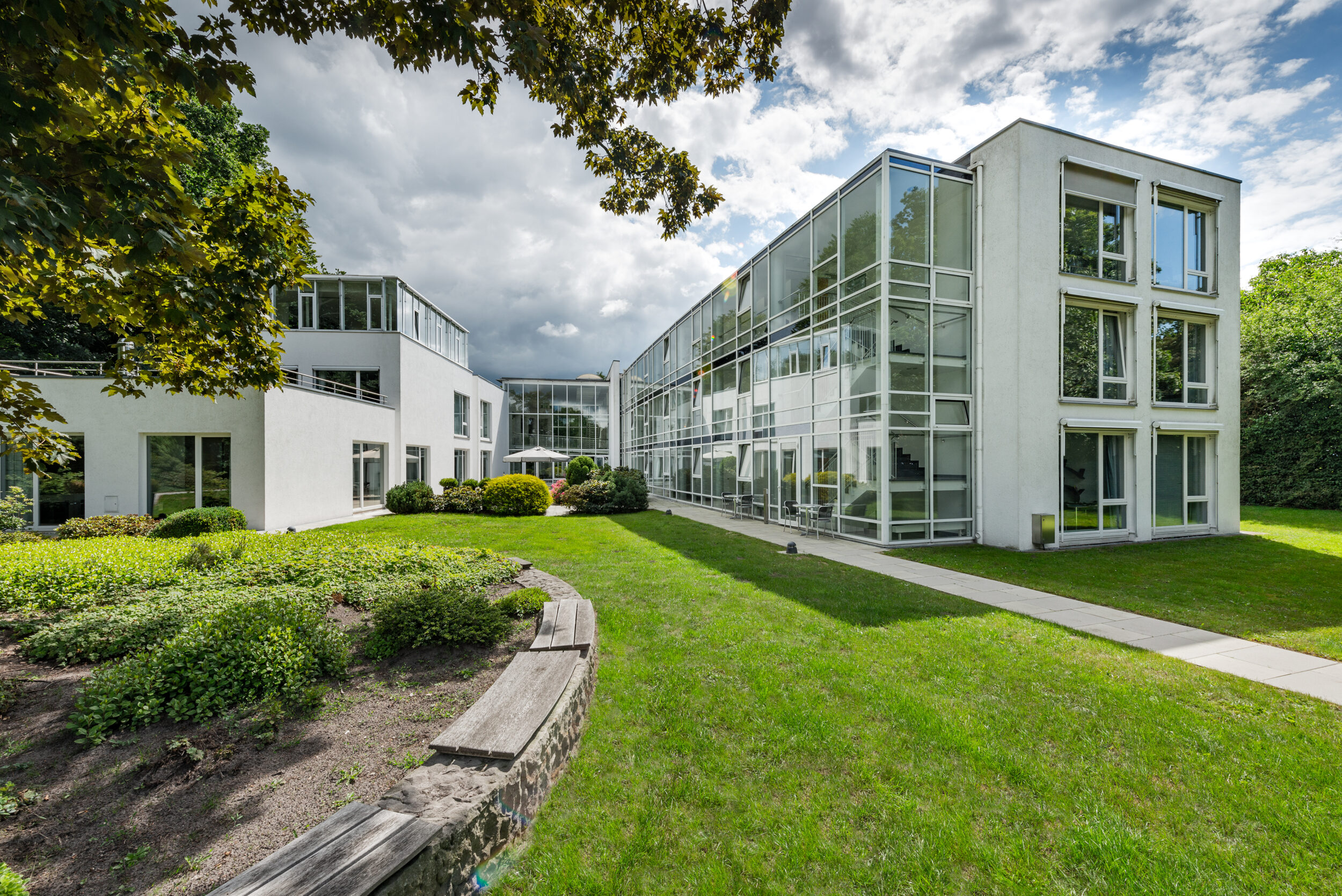

Top research in northwestern Germany extends beyond the universities in Bremen and Oldenburg; it’s also thriving in Delmenhorst. The Hanse-Wissenschaftskolleg (HWK) brings together around 50 international research fellows each year.
This benefits not only the researchers, but also strengthens the connections between the region’s research institutions. “The Hanse-Wissenschaftskolleg is a special place where I was able to find time to think and look into the topics that interested me that normally the rush of regular life made impossible. It was also a unique experience to be able to interact with people outside my discipline which only rarely happens and almost never during the regular university semester.” This is how the British marine biologist Peter Clift reflects on his experiences there, a sentiment that is likely shared by many researchers from all over the world.
Since its founding in 1997, the HWK has hosted around 50 researchers annually from across the globe, including professors as well as “artists in residence” – writers and visual artists. This year alone, they represent 22 different countries. As an Institute for Advanced Study, the HWK offers fellows up to ten months to pursue a project of their own choosing. Freed from administrative and teaching responsibilities, the fellows can fully concentrate on their research, which for many is a rare and long-awaited opportunity.
Fellows benefit from intellectual exchange on campus – through lectures, discussions, and informal gatherings that bridge disciplines, schools of thought, and academic cultures. Two-thirds of them collaborate in projects with researchers from Bremen, Oldenburg, or both universities, using the HWK as a bridge between the two locations.Die Fellows profitieren dabei vom Austausch auf dem Campus: in Vorträgen, Gesprächen und informellen Begegnungen zwischen den Disziplinen, den Denkschulen und den Wissenschaftskulturen. Zwei Drittel von ihnen kooperieren in ihren Forschungsprojekten mit Wissenschaftler:innen aus Bremen, Oldenburg oder gleich von beiden Hochschulen und machen das HWK so zu einer Brücke zwischen den beiden Standorten.
A Joint Project from the Start
The cross-institutional collaboration with Bremen and Oldenburg was an integral part of the HWK’s design from the very beginning. After all, the founding representatives, Ulrich Preuß from the University of Bremen and Professor Thomas Blanke from the University of Oldenburg, jointly drafted the institute’s statutes. Their vision was to bring together different disciplines and the research strengths of both universities. This served as the basis for the HWK’s key research areas.
Like the universities themselves, these areas have continued to evolve since. Fellows can now apply in five thematic areas: Brain and Mind (neuroscience and cognitive sciences and related disciplines), Earth (land, sea, and climate), Technology and Science (mathematics, physics, chemistry, computer science, engineering, energy research, aerospace, astronomy, and astrophysics), Society (social sciences, humanities, and the liberal arts), and Arts and Literature (interdisciplinary collaborations in science, art, and literature). These areas combine the research strengths of both universities while offering space for a wide variety of topics and perspectives.
“The concentration of well-equipped research institutions in such a small space is unparalleled”
Andreas Teske, a professor at the Department of Marine Sciences as the University of North Carolina at Chapel Hill (USA), provides a more specific example of how these collaborations work. He has been a fellow at the HWK four times since 2007. During his current stay, he is collaborating with Professor Thorsten Dittmar from the University of Oldenburg, Professor Kai-Uwe Hinrichs from the University of Bremen, and Dr. Gunter Wegener from the Max Planck Institute for Marine Microbiology in Bremen. Together, they are investigating how microorganisms utilize fossil carbon materials such as oil and gas below the ocean floor and how these processes influence the global carbon cycle.
“At the Hanse-Wissenschaftskolleg, I am surrounded by some of the world’s leading marine science institutions such as the universities, the Max Planck Institute for Marine Microbiology, the University of Bremen’s MARUM – Center for Marine Environmental Sciences, the University of Oldenburg’s Institute for Marine Chemistry and Biology, and the Alfred Wegener Institute,” he says. “This concentration of well-equipped research institutions in such a small space is unparalleled. And the collaboration is exceptionally collegial. There is no competition; on the contrary, everyone convinced that we can achieve more by working together.”
Study Groups: Spaces for Exchange and New Collaborations
Additional collaborations emerge through study groups. This HWK format has the goal of encouraging dialogue between current and former fellows and external researchers. The institute supports the groups through regular workshops in Delmenhorst.
Researchers from Bremen and Oldenburg work together in several study groups. Topics range from diversity in education to interdisciplinary music research. Just how fruitful this exchange can be is evidenced by the Fiction Meets Science group led by sociologist Uwe Schimank from the University of Bremen and literary scholar Anton Kirchhofer from the University of Oldenburg. Since 2011, they have explored how novels portray science and the lives of researchers. In addition to scholars from Bremen and Oldenburg, international partners are also involved, including from Cardiff University.
This project has given rise to an international network that has received repeated support from the Volkswagen Foundation and serves as a platform for new research projects as well as funding for early-career researchers. Fiction Meets Science thus exemplifies the essence of the Hanse-Wissenschaftskolleg: a place where disciplines converge, new and unconventional ideas flourish, and long-term collaborations are formed between Delmenhorst, Oldenburg, and Bremen, and beyond.