

Two doctoral researchers from the Northwest Alliance have been invited to participate in “RTG connect,” a networking and exchange event organized by the German Research Foundation (DFG).
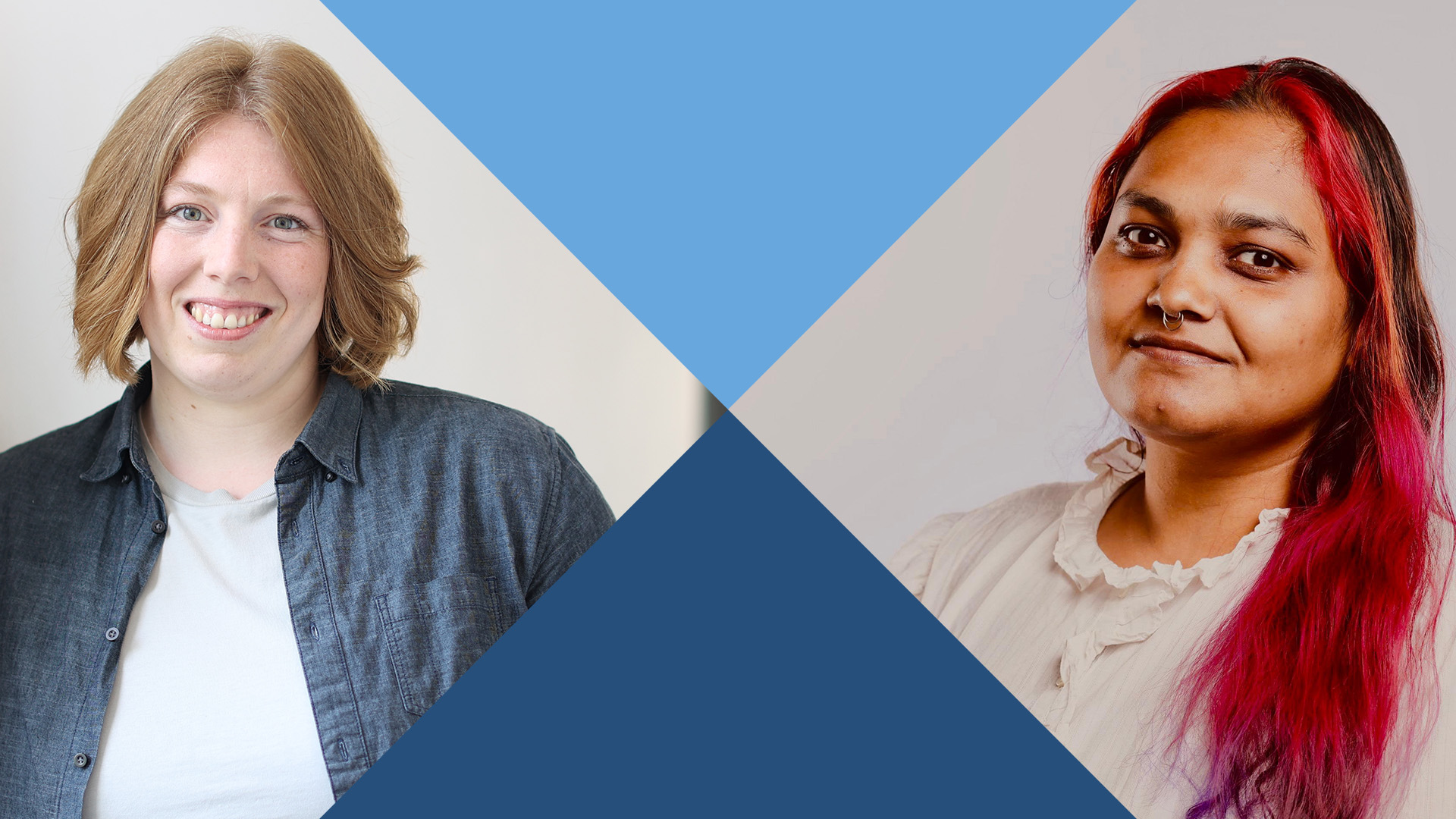
Mira Richts of the University of Bremen and Neha Nageswaran of the University of Oldenburg – both doctoral researchers in computer science – will represent their universities at the DFG event, which takes place from October 13 to 14, 2026, in Bonn and brings together doctoral researchers from across Germany. The University of Bremen’s Executive Board and the University of Oldenburg’s Presidential Board nominated the two researchers. Each participating university sends just one doctoral researcher, making this a particularly exclusive opportunity.
As representatives of the Northwest Alliance, Richts and Nageswaran will join doctoral researchers from other universities with DFG-funded Research Training Groups, along with members of the DFG Senate Committee on Research Training Groups, the DFG Senate, and DFG staff.
About RTG connect
RTG connect gives doctoral researchers a platform to share their experiences in a specially designed format and discuss ideas for (International) Research Training Group programs. The event also gives participants a chance to connect directly with members of DFG’s scientific committees and fellow researchers.
About Mira Richts
Mira Richts is a doctoral researcher at the University of Bremen in the joint Research Training Group HEARAZ (“Hearable-Centered Assistance: From Sensor to Participation”), run jointly by the Universities of Bremen and Oldenburg. She previously earned her MSc in Hearing Technology and Audiology from the University of Oldenburg.
Her doctoral research explores how speech can serve as a biomarker for cognitive change. Early detection of neurocognitive conditions in older adults matters especially in clinical settings, where it can shape treatment and outcomes. Spoken language is a natural focus for this kind of research: it’s part of everyday communication, and recording and analyzing it automatically requires relatively few resources.
Starting in September, Richts will collect speech data at the Geriatric Center Oldenburg as part of her study DEESA (“Differentiating Delirium and Dementia through Spontaneous Speech”), under the guidance of Prof. Dr. Tanja Schultz (Cognitive Systems Lab, University of Bremen) and Prof. Dr. Tania Zieschang (Geriatrics and Health Services Research, University of Oldenburg). She’ll use this data to develop algorithms that can distinguish between delirium and dementia.
About Neha Nageswaran
Neha Nageswaran of the University of Oldenburg, also a doctoral researcher in the joint HEARAZ program, completed her bachelor’s degree and first master’s degree in computer science and engineering in India. She went on to earn a second master’s degree in AI and robotics at Hof University.
At the University of Oldenburg, she aims to advance her research in AI for healthcare. In the Department of Assistance Systems and Medical Device Technology (AMT), Nageswaran began by working with previously collected multimodal datasets from older and younger adults – data captured through cameras, instrumented treadmills, and various wearable sensors – to build a comprehensive understanding of the material.
This work gave her firsthand experience with the entire data-collection pipeline and the challenges of integrating different sensor types for gait analysis.
She presented this research in July at the IEEE Engineering in Medicine and Biology Society’s annual international conference (EMBC 2026) in Toronto, Canada.
Building on this foundation, she’s now preparing her own experimental study, which will draw on a wide range of sensor technologies, including functional near-infrared spectroscopy (fNIRS), inertial measurement units (WINGS), electromyography (EMG), wearable devices, instrumented treadmills, and camera-based motion-capture systems.
About HEARAZ
HEARAZ is a joint Research Training Group with eleven doctoral researchers from the Universities of Oldenburg and Bremen. Together, they’re developing networked, ear-based technical assistance systems for mobile, individualized healthcare –spanning perception, communication, and mobility – and working to bring these systems into everyday practice. HEARAZ hosts summer and winter schools twice a year, bringing doctoral researchers and project leaders together. The program has also established an industry advisory board and a patient advisory board to help ground its projects in real-world needs. Collaboration among the doctoral researchers ranges from informal peer support to co-authored publications.