

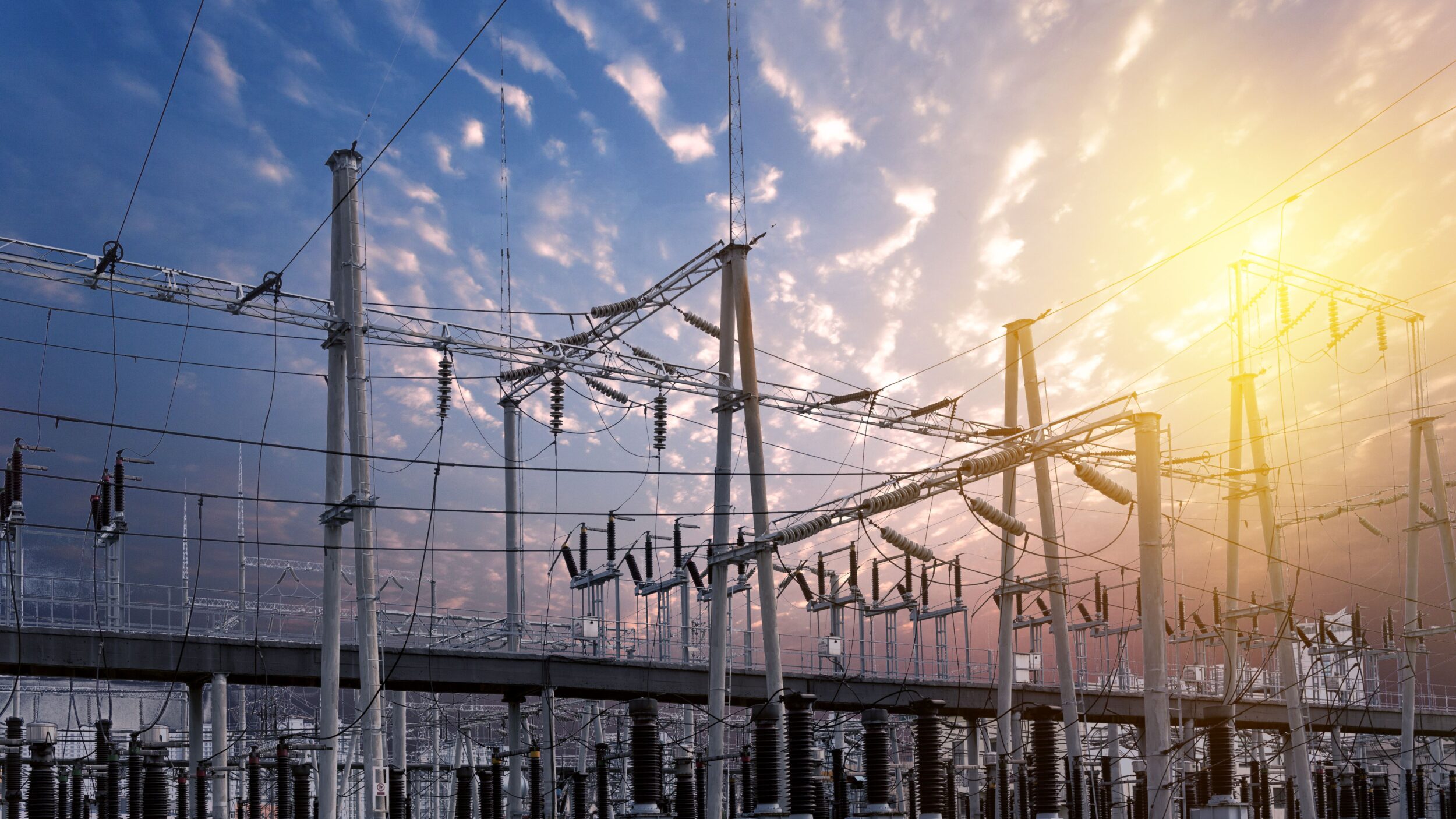

Greater resilience for electricity and heating grids: The University of Oldenburg is involved in two of the five newly funded projects by the Energy Research Centre of Lower Saxony (efzn). The University of Bremen is participating as an associated partner in one of the projects.
Whether it’s extreme weather, accidents, terrorist attacks, or even acts of war: energy supply systems are exposed to a wide range of threats. To better prepare electricity and heating networks in Lower Saxony for crises, the Energy Research Centre of Lower Saxony (efzn) is supporting five small, agile projects this year that address the topic of “Resilient Energy Systems.” The goal is to strengthen interdisciplinary research and to present policy options to the Lower Saxony state government. The University of Oldenburg is leading one of the five selected projects and is involved in a second one. The University of Bremen is participating in the second project as an associated partner, though it is not receiving direct funding itself.
“We are pleased with the keen interest in our call for proposals. It underscores the applicants’ strong sense of responsibility for strengthening the resilience of the energy system in Lower Saxony,” explains efzn Board Spokesperson Prof. Dr. Sebastian Lehnhoff, professor of energy informatics at the University of Oldenburg.
The project involving researchers from Oldenburg and Bremen focuses on a new concept for distribution grids. The other, led by researchers from Oldenburg, addresses the need for continuing education on the topic of resilient energy grids.
Greater Flexibility in the Power Grid
In the “ReKoMi” project, the participants aim to conduct a short study to determine how the concept of a cellular grid can be meaningfully implemented in the power supply. The researchers are investigating whether connecting medium-voltage cells via direct current coupling could improve the resilience of Lower Saxony’s power grids. Participants include energy computer scientist Prof. Dr. Astrid Nieße from the University of Oldenburg and electrical engineer Prof. Dr. Johanna Myrzik from the University of Bremen. The project is led by Prof. Dr. Regine Mallwitz from the University of Braunschweig.
Further Training for Various Target Groups
The skills that experts in administration, business, politics, and academia will need in the future to successfully manage crises in critical infrastructure and energy systems are the focus of the project “Resilience Skills for a Crisis-Resilient Energy System in Lower Saxony: Analysis of Competency Needs & Development of a Further Training Map,” led by Prof. Dr. Klaus Fichter, a member of the Executive Board of C3L – Centre for Lifelong Learning at the University of Oldenburg, and Tim Center, managing director of C3L.
The project team is working to identify which competencies are essential for a resilient energy supply and to compile a catalog of relevant competencies for various target groups. The goal is to systematically document existing continuing education offerings and to formulate recommendations for future training programs.
Funding for the projects begins on August 1 and is limited to a maximum of six months.
Editor: Ute Kehse, redaktion@uol.de