
Nexus of Ocean, Climate, Biodiversity
The Universities of Bremen and Oldenburg are combining their strengths in the natural and environmental sciences to gain a deeper understanding of the complex interactions between biological, chemical, geological, and physical processes within the Earth system. Social science perspectives on governance, sustainability, and ecosystem management round out this approach, which combines academic excellence with societal relevance. .
Disciplines
Biology
Chemistry
Geography
Geo Sciences
Marine Engineering
Physics
Social Sciences
Economics
Environmental Sciences
Mathematics
Computer Science
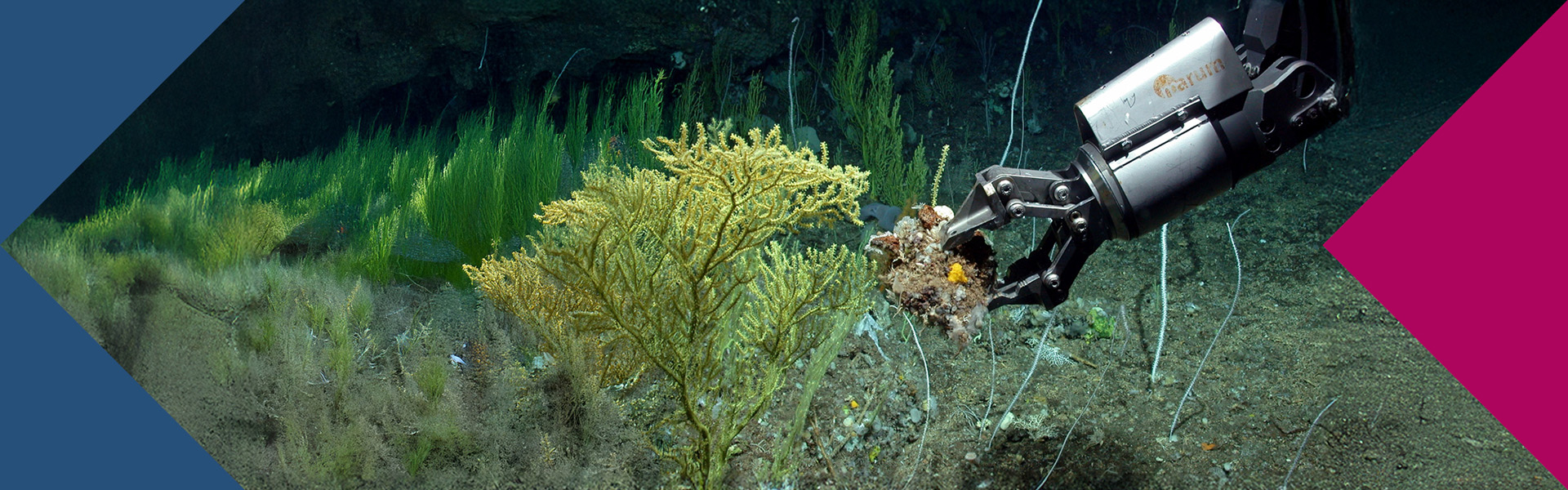
Marine, polar, and climate research is an area of focus for the University of Bremen.MARUM – Center for Marine Environmental Sciences studies the role of the oceans in global material cycles and the climate system. MARUM houses one of the three international core repositories of the International Ocean Drilling Programme (IODP³) IODP³) and key research infrastructure such as underwater robots and seafloor drilling equipment. With it, Bremen provides key resources for international research. The Institute of Environmental Physics contributes expertise in satellite-based remote sensing and climate data analysis. Earth system data is fed into global data infrastructures via the PANGAEA data portal, which is jointly operated by MARUM and the Alfred Wegener Institute.
The University of Oldenburg focuses on marine ecosystems, coastal regions, and sustainability. Its Institute of Biology and Environmental Sciences (IBU) and Institute of Marine Chemistry and Biology (ICBM) are jointly investigating the interface between terrestrial and marine ecosystems. With the Spiekeroog Coastal Observatory and its unique analytical and experimental equipment, Oldenburg provides key infrastructure for this purpose. In addition, the ICBM stands for interdisciplinary and cross-scale biological, geochemical, and physical marine research. Research at the Helmholtz Institute for Functional Marine Biodiversity at the University of Oldenburg (HIFMB) focuses on changes in biological diversity in the oceans, its significance for ecosystem processes, and new approaches to its protection and restoration.
The collaboration between the two universities in the Cluster of Excellence “The Ocean Floor” serves as a prime example of how their complementary profiles build on one another. The researchers combine studies of processes occurring over geological time scales with studies of current changes in biodiversity. They combine Earth system modeling with experimental marine biology and insights into biogeochemical fluxes with knowledge of ecosystem functions. This makes the ocean, climate, and biodiversity network academically coherent and internationally outstanding.
Together with the University of Groningen, the researchers are also strengthening collaboration between the natural sciences, social sciences, and humanities and liberal arts. At the same time, integrating data platforms, expeditions, HPC capabilities, and shared experimental pipelines enhances the efficiency and funding potential of large-scale research initiatives.
Spokespersons of the Focal Research Area
We bring together insights from the natural sciences, social sciences, and humanities and liberal arts to address challenges of great societal importance, such as environmental justice, adapting coastal communities to climate change, and the governance of marine ecosystems.
Professor Helmut Hillebrand, University of Oldenburg
Together with the University of Groningen, we are training the researchers of tomorrow. With their academic expertise, they advance basic research in marine and environmental sciences and help solve societal problems. To promote this, doctoral candidates and postdocs receive comprehensive support from all participating institutions.
Prof. Dr. Kai-Uwe Hinrichs, University of Bremen